Cooling System - Inspection/Upgrading
85volvo03SECTION GROUP NO.
26 103
DATE JULY, 1985
RE:
INSPECTION/UPGRADING OF COOLING SYSTEM B28 MY 1983-
THIS BULLETIN IS APPLICABLE TO THE U.S. AND CANADIAN MARKET
Complaints of high temperature gauge readings or overheating may be caused by an inaccurate temperature gauge, or a cooling system that does not meet the specifications. It is, therefore, very important to define the reason for the complaint before any parts are replaced.
The first section of this Service Bulletin covers general inspection and testing of the cooling system
The second section provides information regarding upgrading to improve the cooling capacity at idle and in stop and go with traffic.
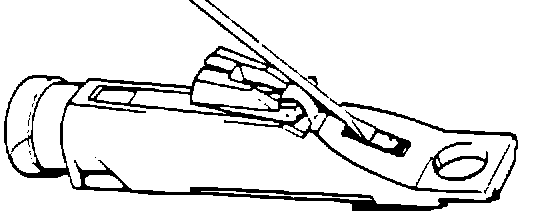
1. INSPECTION, COOLING SYSTEM
^ Check Fan Belt Tension
^ Coolant
Check coolant level.
Measure the coolant mixture. The anti-freeze concentration must be 50 percent; equal to a freezing point of -35 to -50 degrees C (-31 to -58 degrees F). Use for example coolant tester (P/N 9985011-7)
NOTE: ONLY VOLVO ANTI-FREEZE TYPE C IS ACCEPTABLE
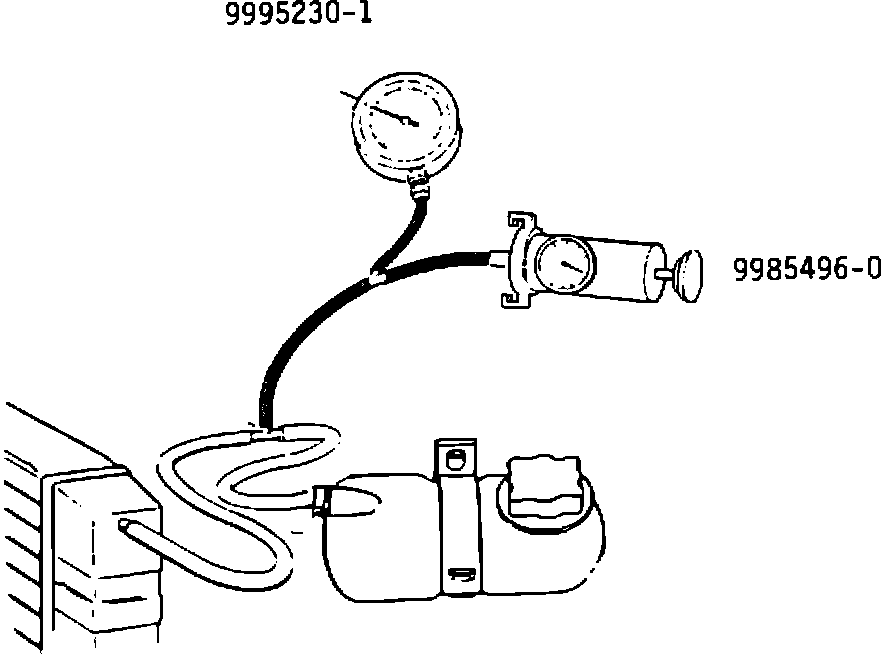
^ Pressure Check
The pressure tester (9985496-0) and pressure gauge (9995230-1) must be connected with a T-connection into the hose between the expansion tank and the radiator (as illustrated). The gauge on the pressure tester is not accurate enough to detect small leaks.
Tighten expansion tank cap. Increase the pressure until the relief valve in the cap opens.
OPENING PRESSURE:
Black cap, marked 75 kpa = 65- 85 kpa ( 9.4-12.3 PSI)
Grey cap, marked 150 kpa = 145-155 kpa (21.0-22.5 PSI)
To leak test the cooling system, apply pressure at 60 kpa (8.7 PSI). Maximum allowed pressure drop is 3 kpa (0.4 PSI) in three minutes.
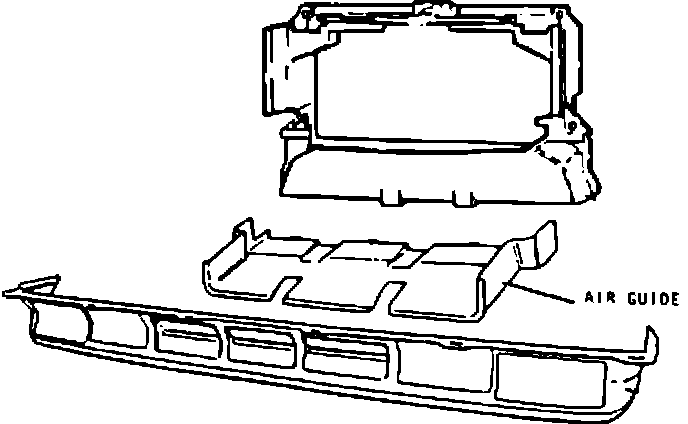
^ Air Guide
Make sure the air guide in the spoiler is properly installed.
^ A/C Condensor and Radiator
Check that the A/C condensor and radiator are free from foreign objects.
^ Cooling Fan
Check cooling fan type and function. The fan clutch should increase the fan speed when it is exposed to an air temperature of 65-85 degrees C (149-185 degrees F).
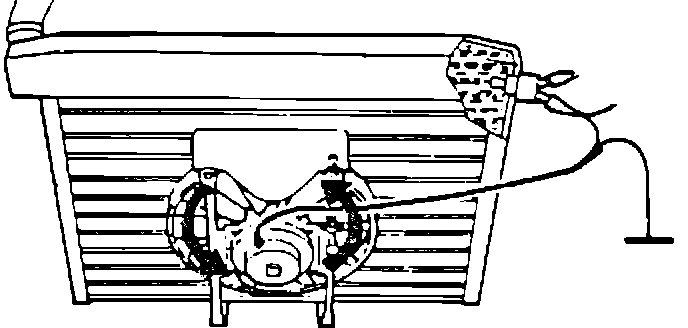
^ Electrical Cooling Fan
Check the function by connecting the two wires at the thermal switch located at the upper left side of the radiator.
Ignition ON. The fan should start and rotate counter clockwise as viewed from the front (as illustrated).
^ IGNITION TIMING
Correct timing is 23 +/- 1 degree BTDC at 2,500 rpm. (vacuum disconnected). Make sure that the vacuum advance cuts in at idle when the electrical cooling fan starts (see Service Manual 760 GLE Group 26 Page 2:21-22).
If knocking occurs at idle, it could be caused by an unbalanced engine (one bank too lean). The engine should then be balanced according to Service Bulletin Group 21 No. 114, July, 1985.
2. UPGRADING
If the temperature gauge is reading high or the engine overheats during extended idle and/or in stop and go city traffic, the following upgrading can be carried out.
^ Electrical Cooling Fan Switch
For earlier engagement of the electrical cooling fan, a 91 degree C (196 degree F) switch is available under P/N 1274962-8. Use a new rubber bushing, P/N 1274048-6, when replacing the switch.
NOTE: Do not use lubrication of any kind when installing the switch and the rubber bushing.
^ Thermostat
When installing the 91 degree C (196 degree F) electrical cooling fan switch, a 87 degree C (189 degree F) thermostat should be installed. The thermostat kit is available under P/N 273480-4.
^ Expansion Tank Pressure Cap
For an increased safety margin before boiling and loss of coolant occurs, a 150 kpa (21.8 PSI) pressure cap, grey, should be installed P/N 1357390-2.
NOTE: Ensure all hose clamps for the cooling system are tight and hoses free of wear or damage.
^ Water Pump Pulley
For increased cooling fan and water pump speed, which improves the cooling capacity, a small diameter water pump pulley is available under P/N 1271045-5. The smaller pulley requires shorter drive belts, P/N 966976-3.
Claims may be submitted under the new car warranty
1. Inspection = Operation Number = 260033 Time Allowance = 0.3 h
2. Upgrading = Operation Number = 260043 Time Allowance = 1.9 h Including time allowance for inspection.