Engine - Overheating
84volvo02SECTION GROUP NO.
26 110
DATE MARCH, 1984
RE:
ENGINE OVERHEATING B28F
760 GLE
THIS SERVICE BULLETIN APPLIES TO THE U.S. AND CANADIAN MARKETS AND SUPERCEDES SERVICE BULLETIN GROUP 26 NO. 110 DATED OCTOBER 1983.
When investigating complaints of overheating, it is important to distinguish between cars where boiling has been observed versus complaints of high temperature gauge readings.
1. HIGH TEMPERATURE GAUGE READINGS
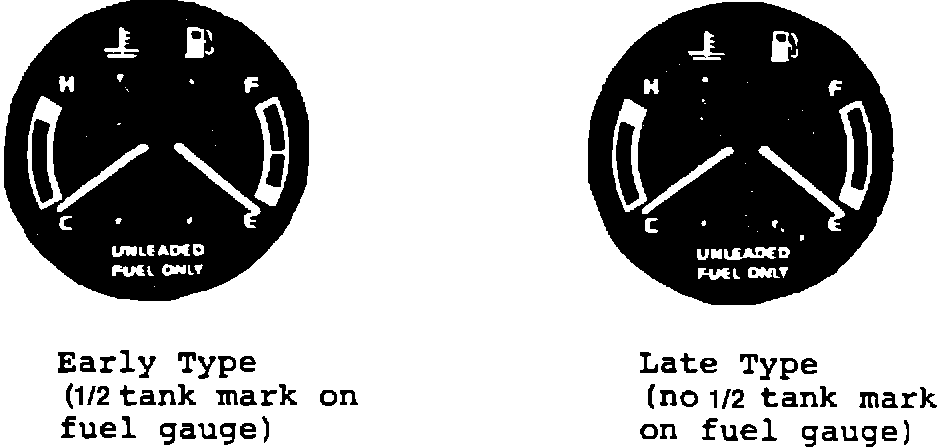
On early production vehicles, the problem may be caused by a temperature gauge, which reads high. Early temperature gauges can be identified by comparing the fuel gauge marking, as illustrated below.
Prior to fitting, the new instrument should be tested as described on Page 3:74 in the 760 Service Manual noting the following revised specifications:
- replace the 68 ohm -resistor with a 45 ohm.
- instead of 75% deflection, the needle should now read just where the red zone begins.
NOTE! Even with a correct instrument, the needle may read slightly into the red zone. The red zone starts at approximately +116~C (240~F) and the cooling system boiling point, with a correct pressure cap and cooling system integrity, is approximately +123~C (255~F).
2. COOLANT SYSTEM BOILING/LOSS OF COOLANT
A. Make sure the air guide, behind the spoiler, is installed.
B. Perform a pressure test of the cooling system according to the 760 Service Manual, Page 2:149.
NOTE! Connect the pressure tester between the expansion tank and the radiator, as shown below. If the pressure drops noticeably within 3 minutes (not 30 seconds as mentioned in the Manual), pay special attention to the following areas for possible leaks:
- between the filler cap and the expansion tank
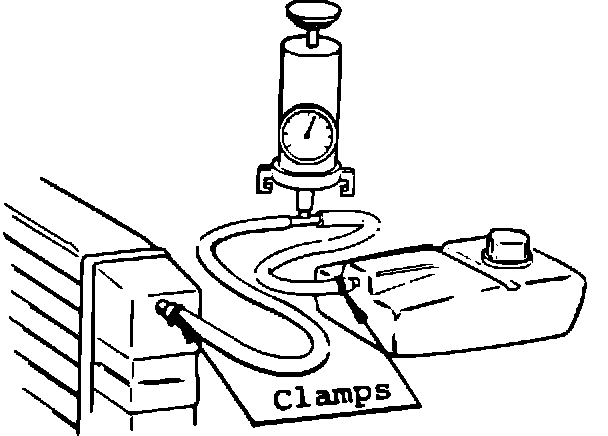
- the fittings for the hose between the radiator and the expansion tank, and if necessary, install clamps, P/N 945652-6 shown below
- radiator upper and lower hose connections (soldering) at the radiator
- leakage in the radiator, core and tanks
C. Check operation of the cooling fans.
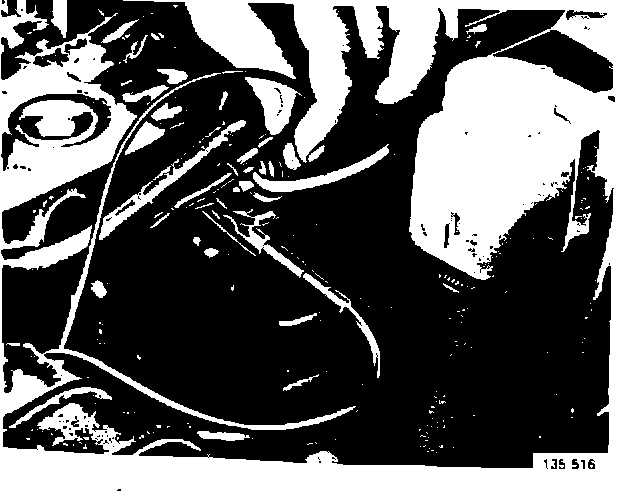
- the auxiliary electric fan should start and run counter clockwise (viewed from the front). To check, connect a jumper wire as shown below. Also see the 760 Service Manual, Page 2:156.
- a correctly operating main engine fan should make considerably more noise at 3,000 rpm than at idle (especially in front of the radiator), if the air temperature at the fan clutch vicinity is higher than +85~C (+185~F).
D. Check the ignition timing which should be 23~/2500 rpm.
If everything described so far is within specifications, or corrected to specification, but did not result in improvements, the electric fan should be connected so that it works when the AC Compressor is engaged. (See next page)
PROCEDURES FOR REWIRING THE ELECTRICAL FAN
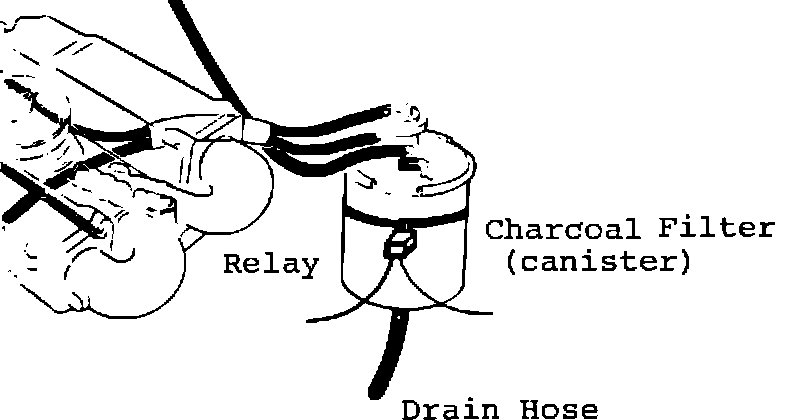
Install a relay, P/N 1324492-6 at the canister in the engine compartment.
A larger hole must be made in the relay mounting to fit the screw for the bracket holding the canister.
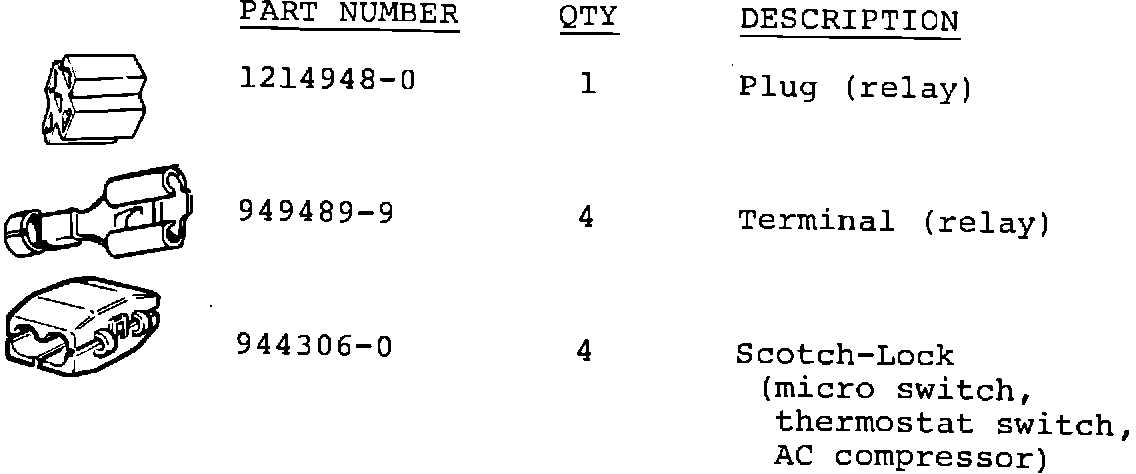
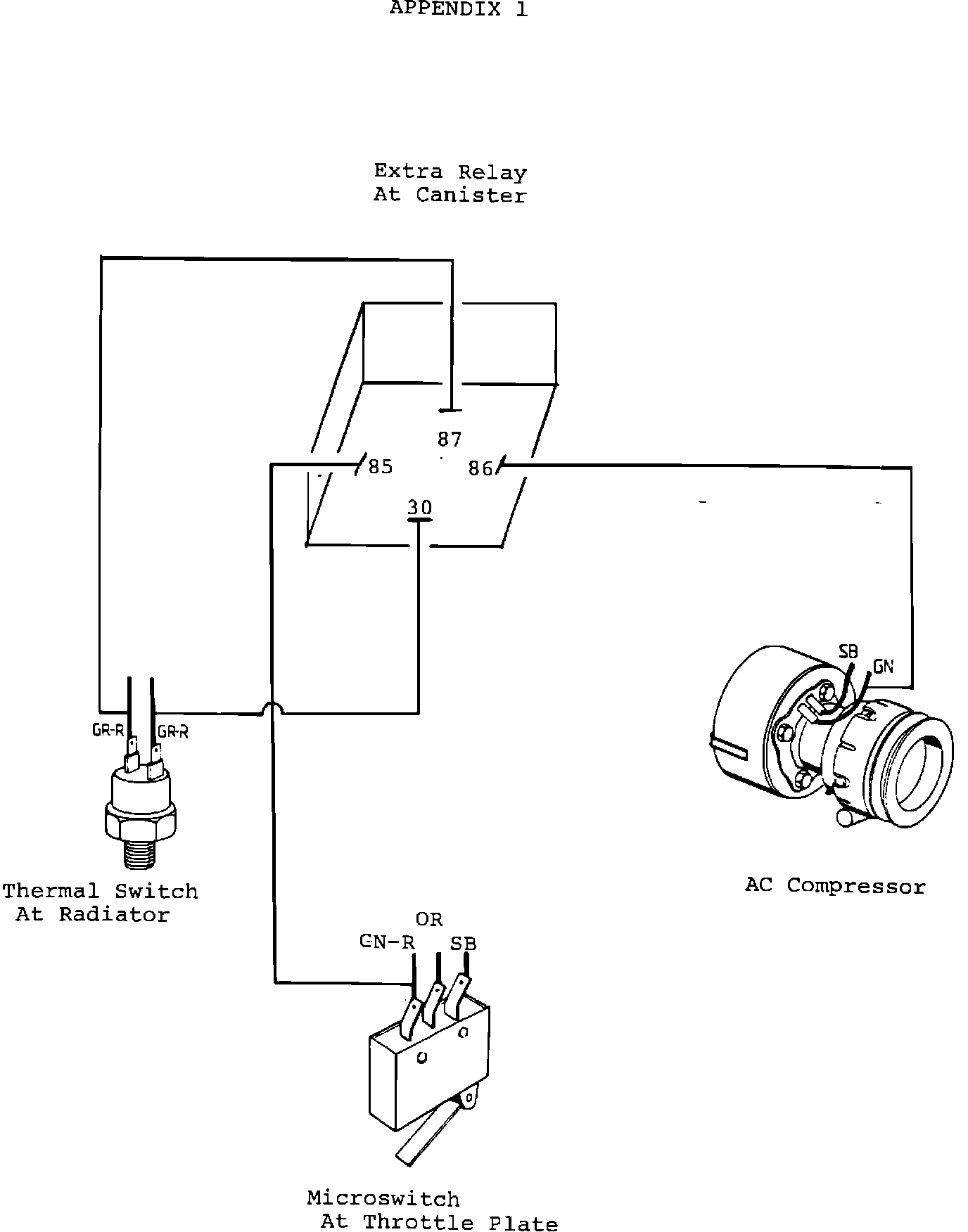
Make up a cable harness according to Appendix 1. The following parts are needed:
Warranty claims may be submitted under the new warranty for fitment of the relay and rewiring the fan circuit. Operation Number 263913 Time Allowance 0.5 hours.