Extrication
Extrication
Immobilize Vehicle
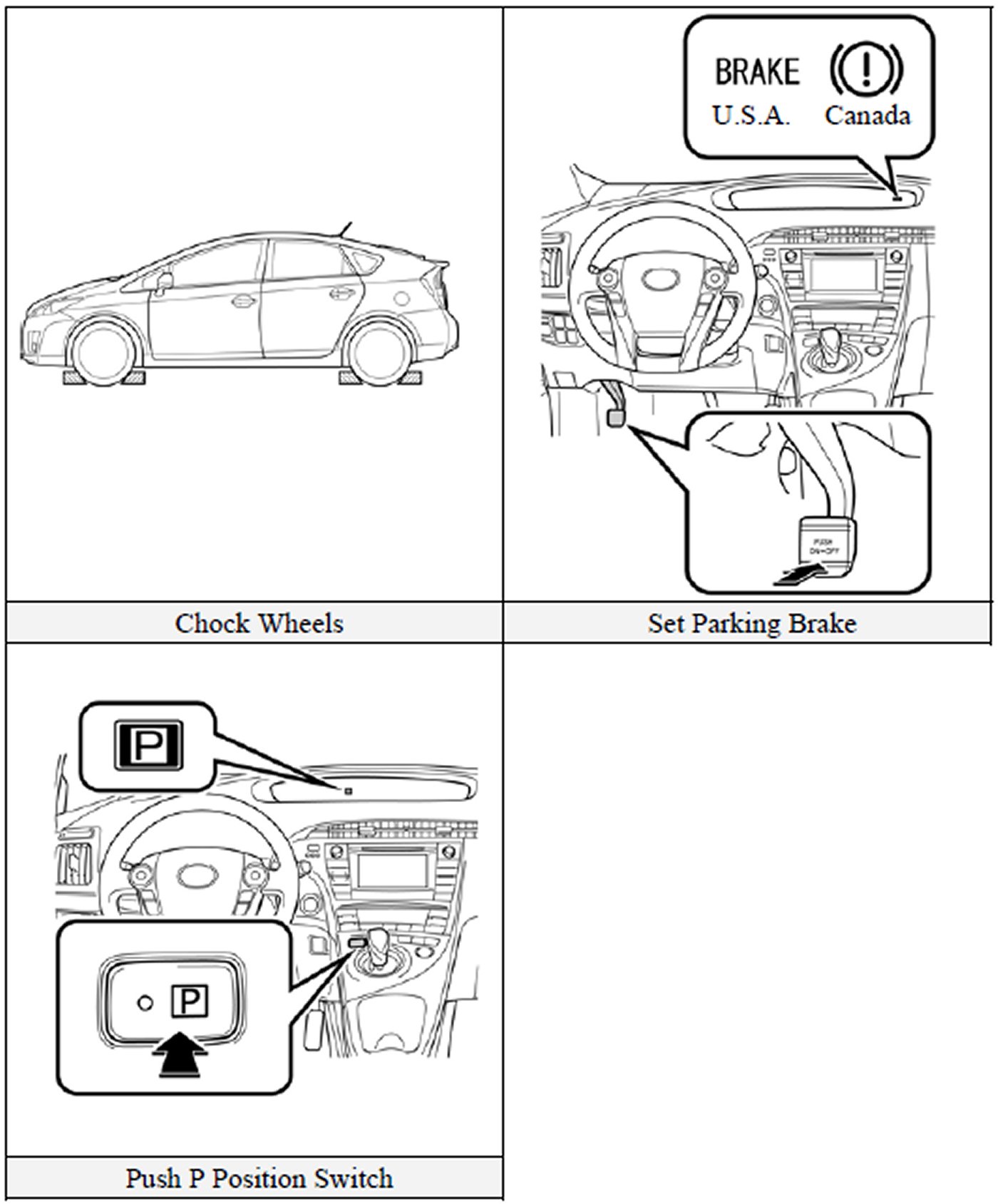
Chock wheels and set the parking brake.
Push the P switch to engage park (P).
Disable Vehicle
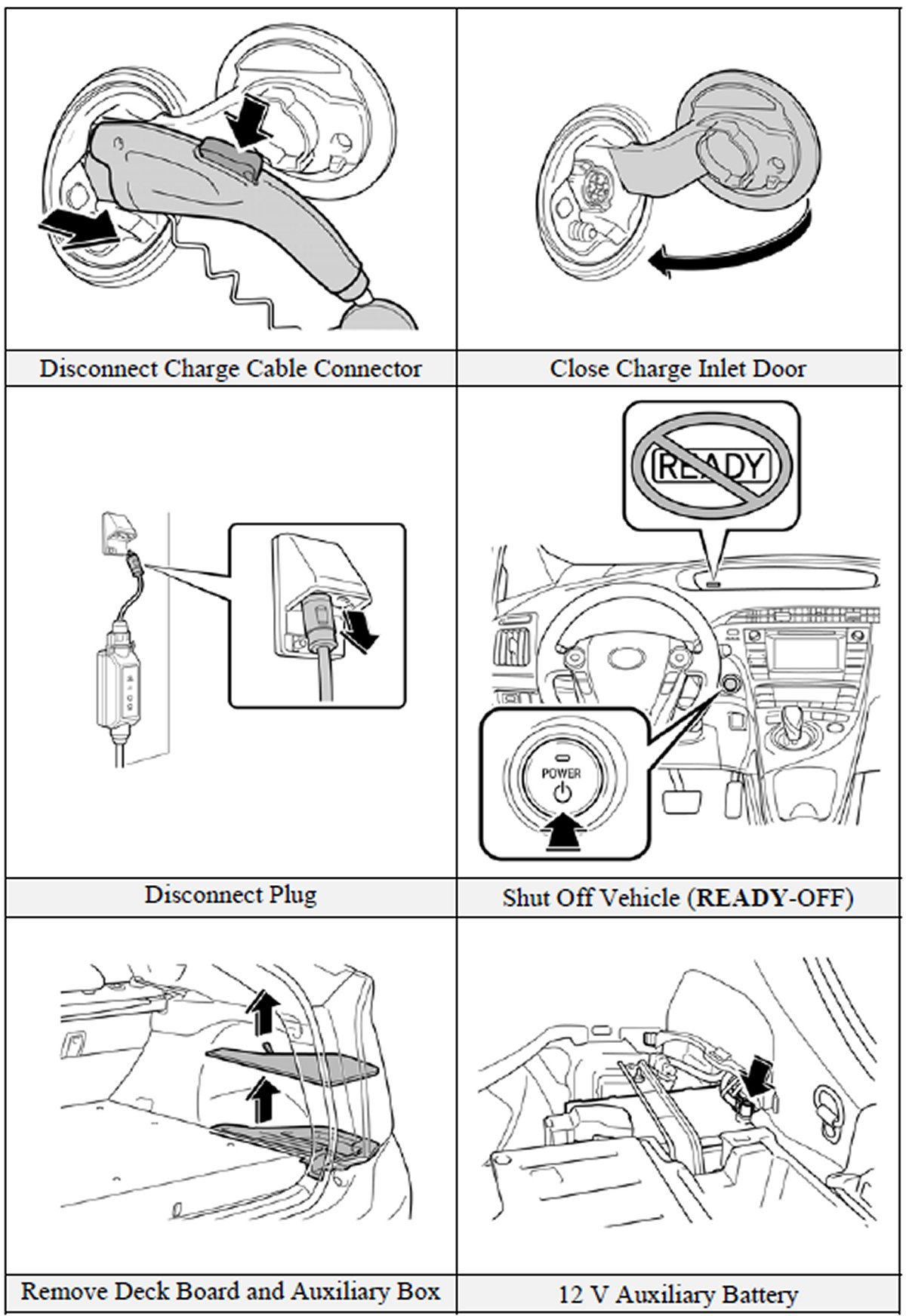
Perform these steps first if the charge cable assembly is connected to the vehicle.
1. Disconnect the charge cable assembly connector from the vehicle. To disconnect it, push the lock release button on the top of the connector and pull it away from the vehicle.
2. Close the charge inlet cap and charge inlet door.
3. Disconnect the plug of the charge cable assembly from the electrical outlet.
Performing either of the following two procedures will shut the vehicle off and disable the HV battery assembly, SRS, gasoline fuel pump, and optional remote air conditioning system.
Procedure #1
1. Confirm the status of the READY indicator in the instrument cluster. If the READY indicator is illuminated, the vehicle is on and operational.
2. Shut off the vehicle by pushing the power button once.
3. The vehicle is already shut off if the instrument cluster lights are not illuminated. Do not push the power button because the vehicle may start.
4. If the smart key is easily accessible, keep it at least 16 feet (5 meters) away from the vehicle.
5. Disconnect the 12 Volt auxiliary battery under the deck board and auxiliary box in the cargo area to prevent accidental restarting of the vehicle.
Procedure #2 (Alternate if power button is inaccessible)
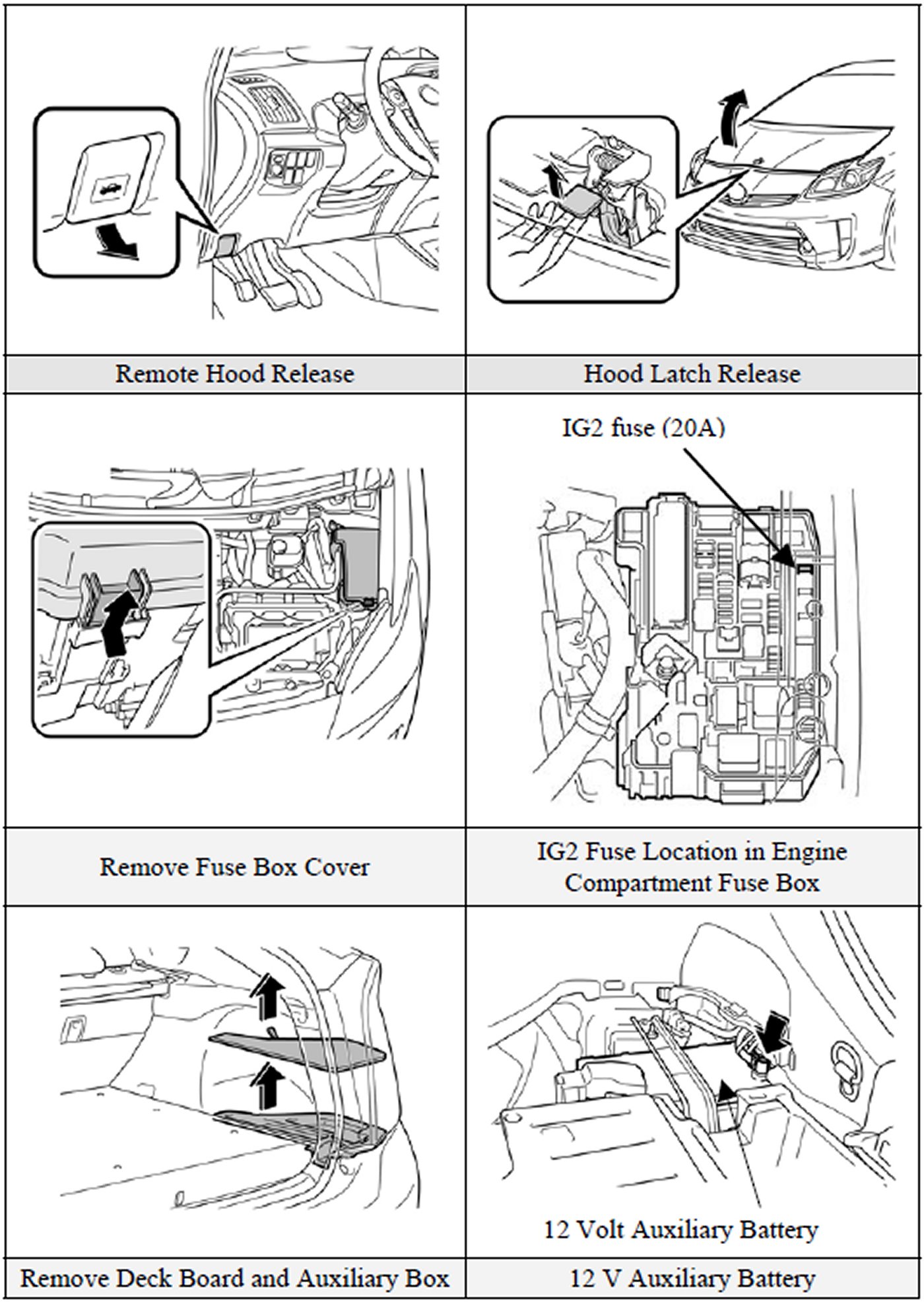
1. Open the hood.
2. Remove the fuse box cover.
3. Remove the IG2 fuse (20A yellow colored) in the engine compartment fuse box (refer to illustration). If the correct fuse cannot be recognized, pull all fuses in the fuse box.
4. Disconnect the 12 Volt auxiliary battery under the deck board and auxiliary box in the cargo area to prevent accidental restarting of the vehicle.
NOTE:
Before disconnecting the 12 Volt auxiliary battery, if necessary, lower the windows, unlock the doors, optional power seat and open the hatch as required. Once the 12 Volt auxiliary battery is disconnected, power controls will not operate.
WARNING:
The high voltage system, including the charging system, may remain powered for up to 10 minutes after the vehicle is shut off, disabled, or charging stops. To prevent serious injury or death from severe burns or electric shock, avoid touching, cutting, or breaching any orange high voltage power cable or high voltage component.
The SRS may remain powered for up to 90 seconds after the vehicle is shut off or disabled. To prevent serious injury or death from unintentional SRS deployment, avoid breaching the SRS components.
If none of the disabling procedures can be performed, proceed with caution as there is no assurance that the high voltage electrical system, SRS, or fuel pump are disabled.
Stabilize Vehicle
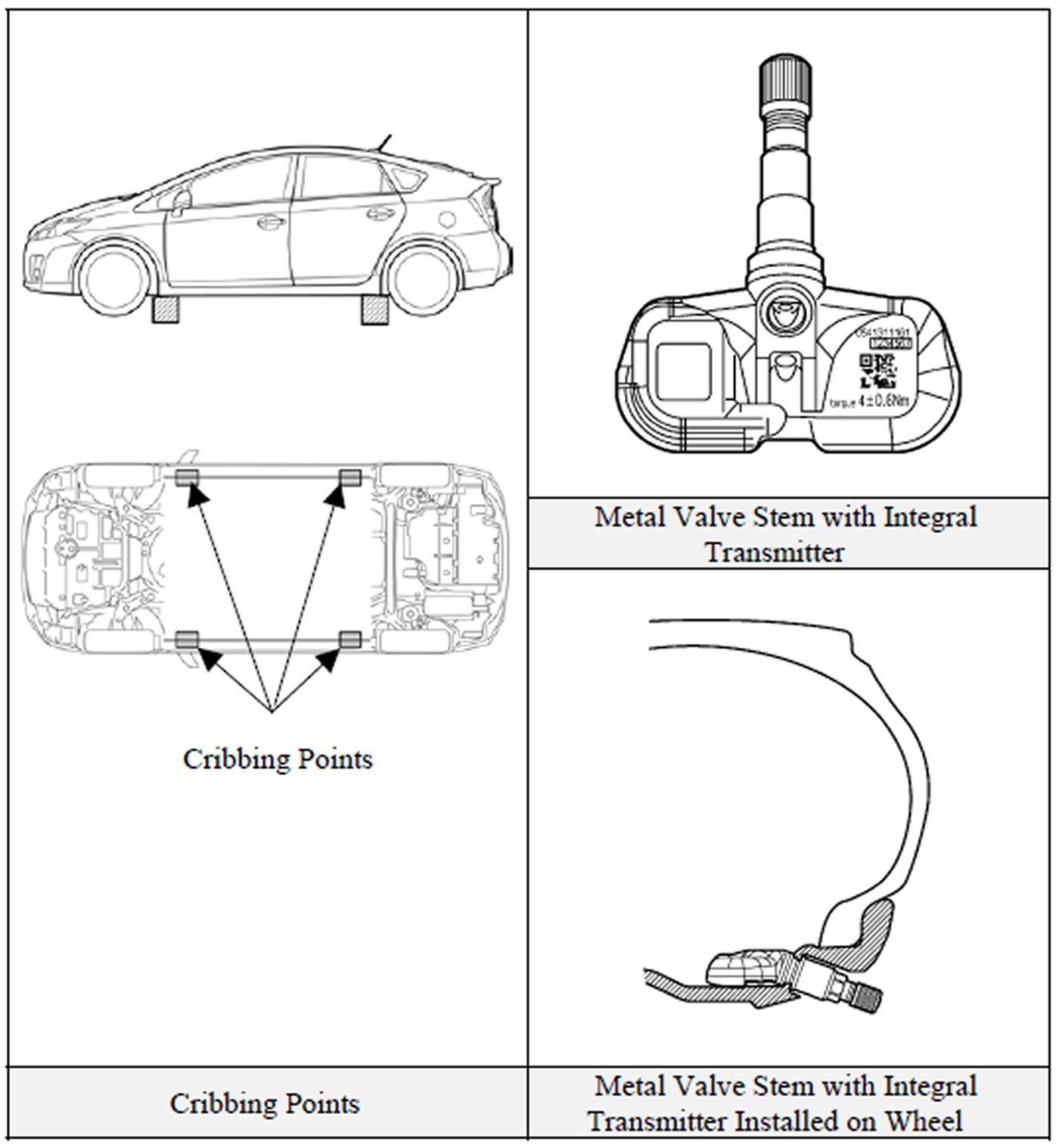
Crib at (4) points directly under the front and rear pillars. Do not place cribbing under the high voltage power cables, exhaust system, or fuel system.
NOTE:
The Prius Plug-in hybrid is equipped with a tire pressure warning system that by design prevents pulling the metal valve stem with integral transmitter from the wheel. Snapping the valve stem with pliers or removing the valve cap and Schrader valve will release the air in the tire.
Access Patients
Glass Removal
Use normal glass removal procedures as required.
SRS Awareness
Responders need to be cautious when working in close proximity to undeployed airbags and seat belt pretensioners.
Door Removal/Displacement
Doors can be removed by conventional rescue tools such as hand, electric, and hydraulic tools. In certain situations, it may be easier to pry back the vehicle body to expose and unbolt the hinges.
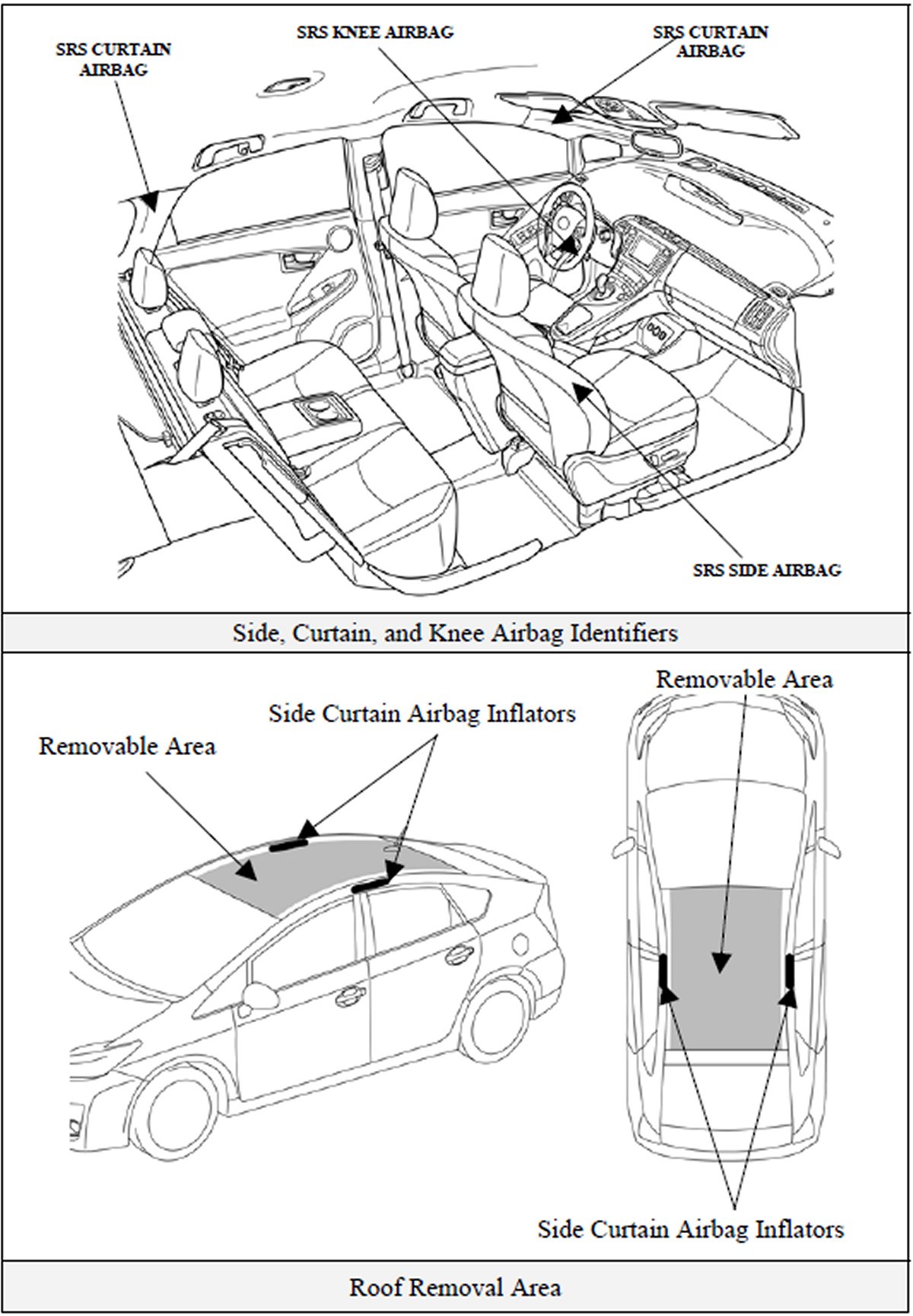
Roof Removal
The Prius Plug-in hybrid is equipped with side curtain airbags. When undeployed, total roof removal is not recommended. Patient access through the roof can be performed by cutting the roof center section inboard of the roof rails as illustrated. This would avoid breaching the side curtain airbags, inflators, and wiring harness.
NOTE:
The side curtain airbags may be identified as illustrated on this page.
Dash Displacement
The Prius Plug-in hybrid is equipped with side curtain airbags. When undeployed, total roof removal is not recommended to avoid breaching the side curtain airbags, inflators, and SRS harnesses. As an alternative, dash displacement may be performed by using a Modified Dash Roll.
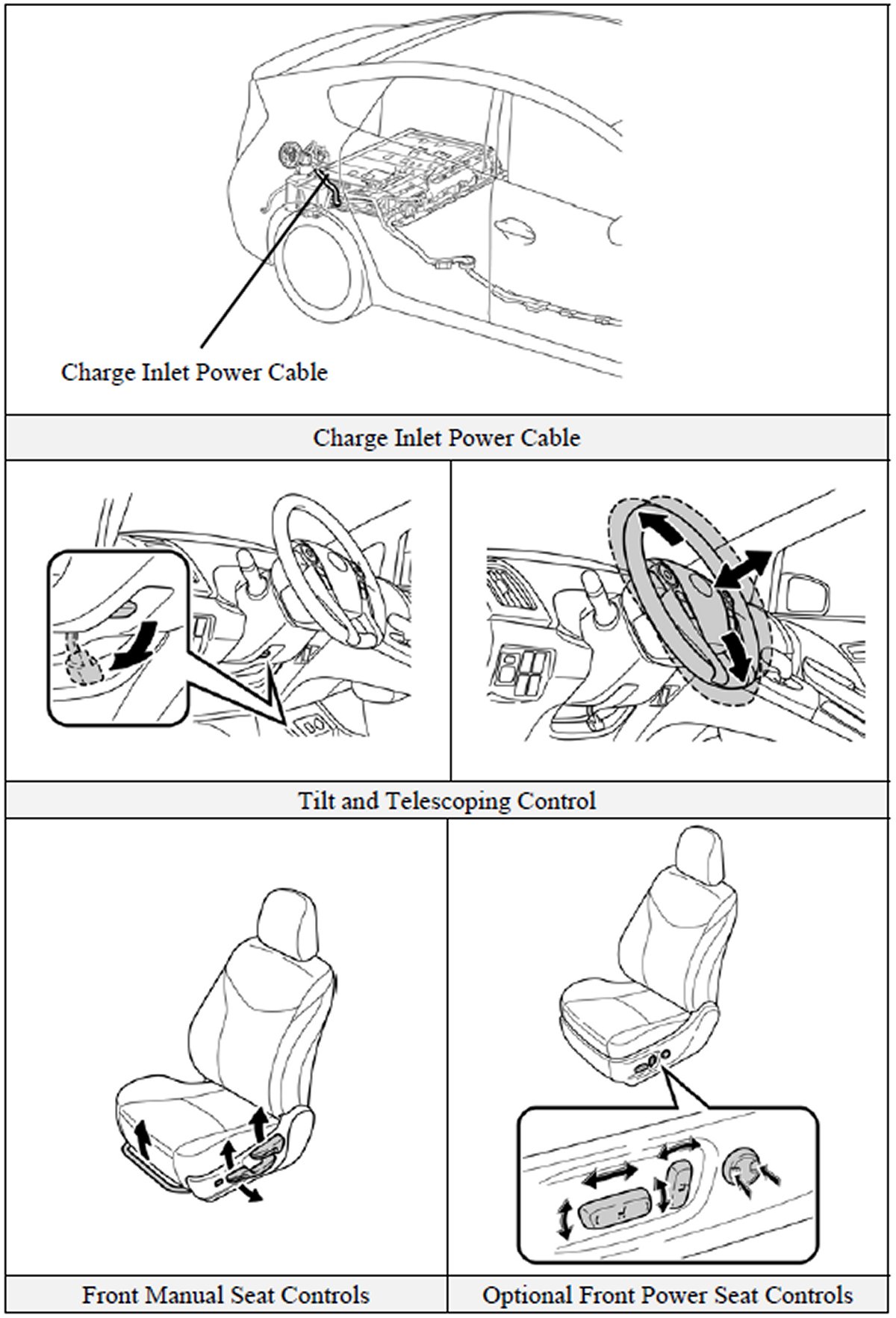
NOTE:
The Prius Plug-in hybrid has an orange power cable that is energized during charging. The charge power cable is routed along the passenger side rear quarter panel.
Rescue Lift Air Bags
Responders should not place cribbing or rescue lift air bags under the high voltage power cables, exhaust system, or fuel system.
Repositioning Steering Wheel and Front Seats
Telescopic steering wheel and seat controls are shown in the illustrations.
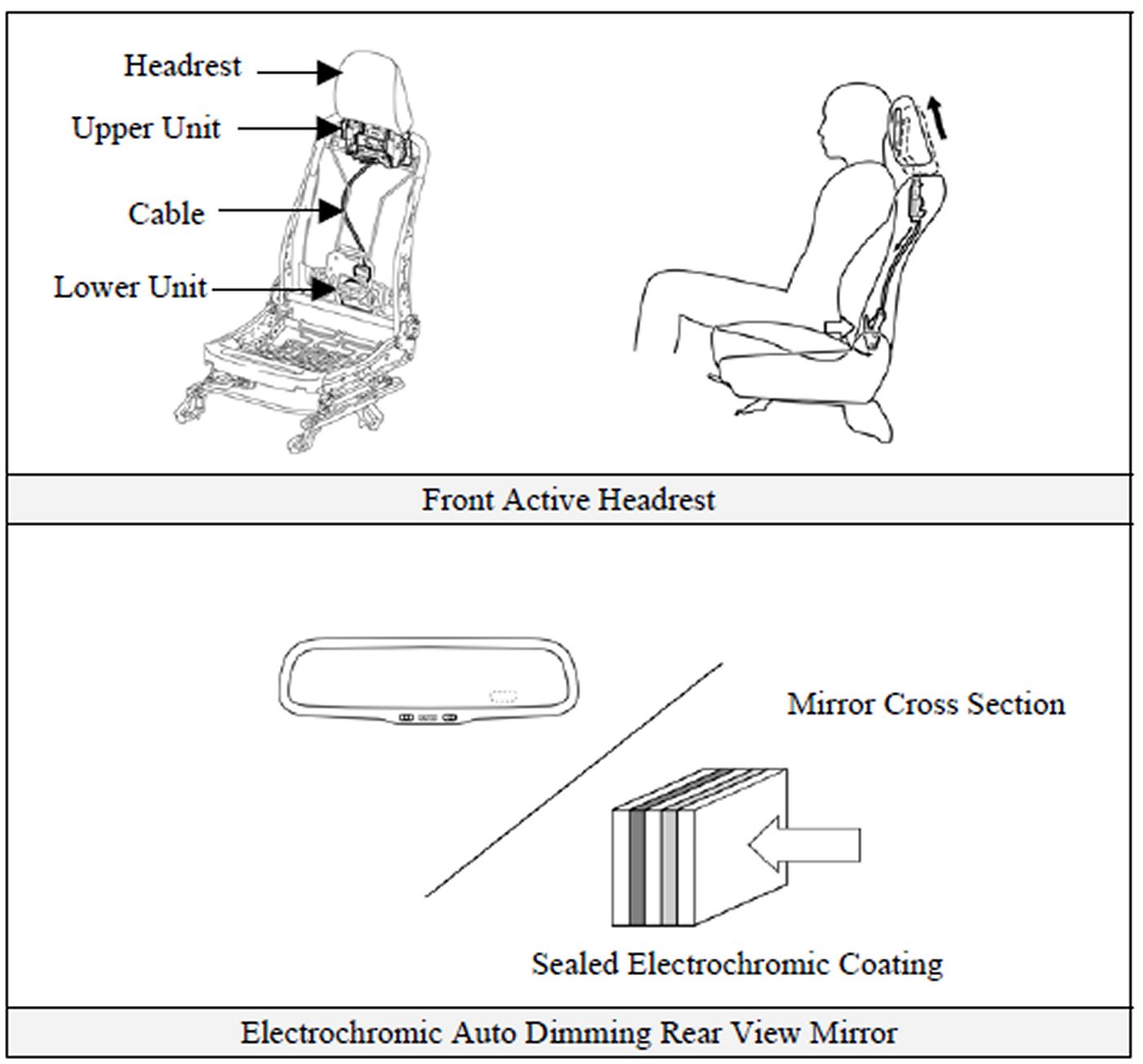
Active Headrest Removal
The Prius Plug-in hybrid is equipped with active headrests, located in both front seatbacks. The active headrests are mechanical non-pyrotechnic head supports that are designed to reduce neck injuries in the event of a rear collision.
No special methods are required to remove the headrests. Push the release button and lift to remove the headrest.
NOTE:
The Prius Plug-in hybrid is equipped with an optional electrochromic auto dimming rear view mirror. The mirror contains a minimal amount of transparent gel sealed between two glass plates that will not normally leak.