- Powertrain/On-Board Diagnostic System Check
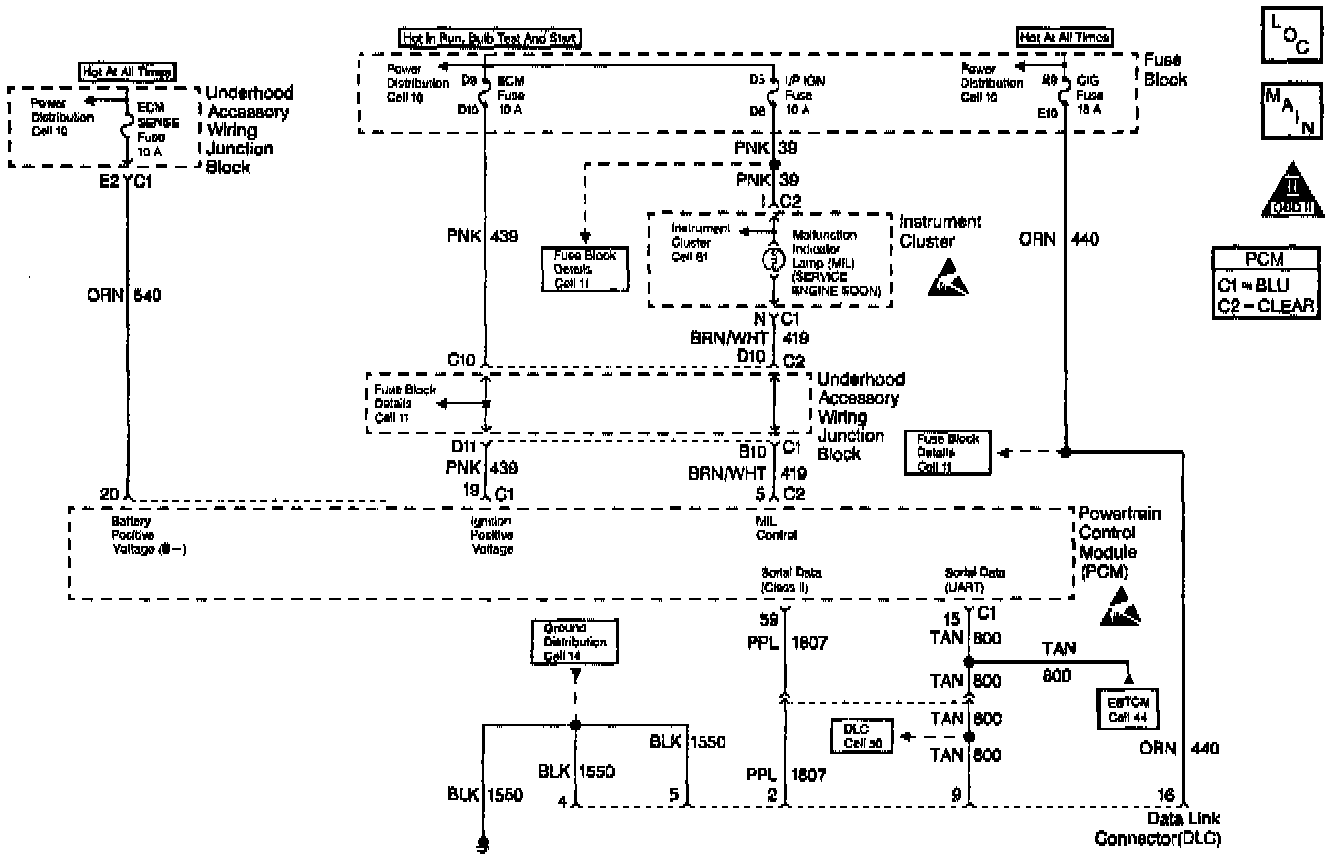
CIRCUIT DESCRIPTION
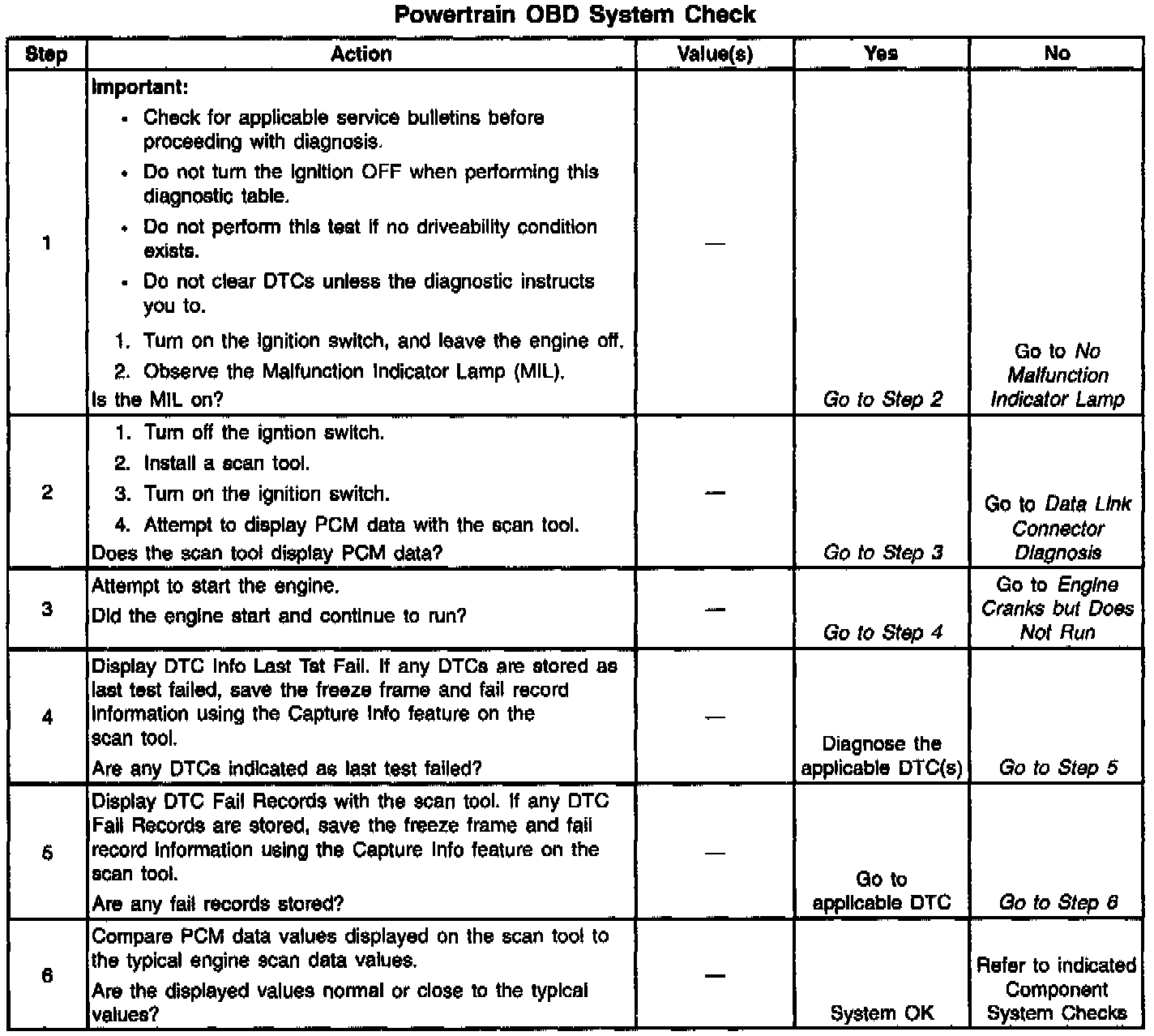
The Powertrain OBD system check is an organized approach to identifying a problem created by an electronic engine control system malfunction. The Powertrain OBD system check is the starting point for any driveability concern diagnosis, because it directs the service technician to the next logical step in diagnosing the concern. Understanding the table and using it correctly will reduce diagnostic time and prevent the replacement of good parts.
DO NOT perform this check if a driveability concern is not present.
DIAGNOSTIC AIDS
Inspect all related wiring and connections including the connections at the PCM. These may cause an intermittent malfunction. Check terminals for the following:
^ Damaged
^ Corroded
^ Pushed out terminals
TEST DESCRIPTION
Number(s) below refer to the Step number(s) on the Diagnostic Table:
1. The MIL should be on steady with the key on engine off. If not, the No Malfunction Indicator Lamp should be used to isolate the malfunction. No Malfunction Indicator Lamp (MIL)
2. This test ensures that the PCM is capable transmitting Class II serial data to the DLC and that the Class II data circuit is not open or shorted. It a DLC problem exists, the Data Link Connector Diagnosis should be used to diagnose the condition. Data Link Connector Diagnosis
3. It the engine will not start, the Engine Cranks but Does Not Run should be used to diagnose the condition. Engine Cranks, But Will Not Run
4. The scan tool may display DTC(s) which are diagnosed in Automatic Transaxle Diagnosis. Refer to Powertrain Control Module Diagnosis table for a complete list of DTC(s) supported by this vehicle application.
6. A scan tool parameter which is not within the typical range may help to isolate the area which is causing the problem.