Fuel Level Sensor Diagnosis
Circuit Description
The PCM requires an accurate indication of fuel level for EVAP system diagnosis. The fuel level in the fuel tank changes the rate of vacuum decay for the EVAP system leak DTCs.
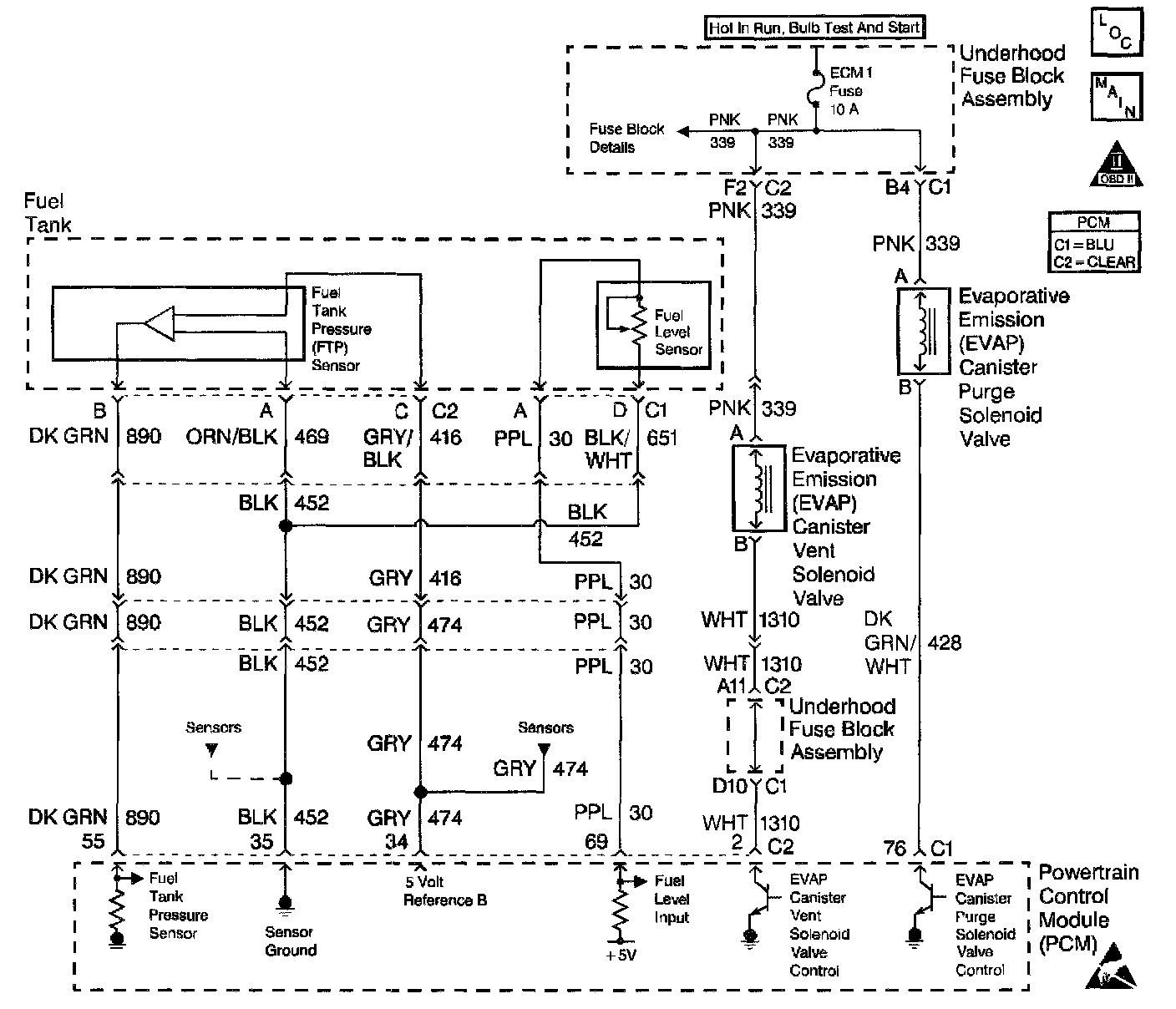
The Fuel Level Sensor changes resistance based on fuel level. The Fuel Level Sensor has a signal circuit and a ground circuit. The PCM applies a voltage (about 5 volts) on the signal circuit to the sensor. The PCM monitors changes in this voltage caused by changes in the resistance of the sensor to determine fuel level.
When the fuel tank is full, the sensor resistance is high, and the signal voltage is only pulled down a small amount through the sensor to ground. Therefore, the PCM will sense a high signal voltage (fuel tank full). When the fuel tank is empty, the sensor resistance is low, and the signal voltage is pulled down a greater amount. This causes the PCM to sense a low signal voltage (fuel tank empty).
The PCM uses the input from the Fuel Level Sensor to calculate the fuel level in the fuel tank. Fuel level data is used in the EVAP system diagnostics. Fuel level data is also sent to the IPC via Serial Data.
The normal resistance values of the sensor are as follows:
^ 40 Ohms plus or minus 2.5 Ohms = Full
^ 248.5 Ohms plus or minus 3.3 Ohms = Empty
This diagnostic table requires the following special tools:
J 33431-B Signal Generator/Instrument Panel Tester
Diagnostic Aids
Important: Fuel level is used to in EVAP system diagnosis. Always diagnose the fuel level sensor before any Other EVAP system components or DTCs.
Test Description
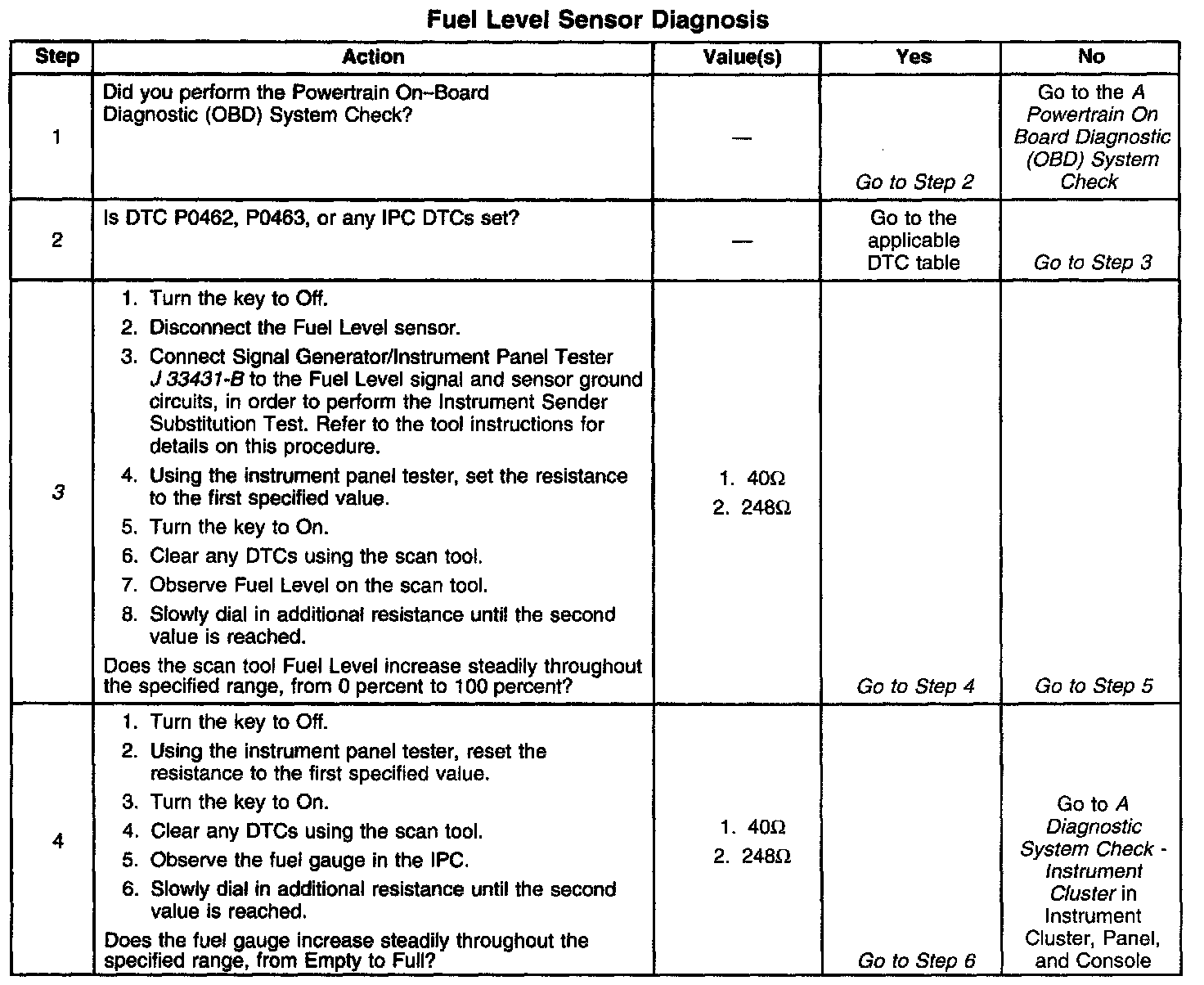
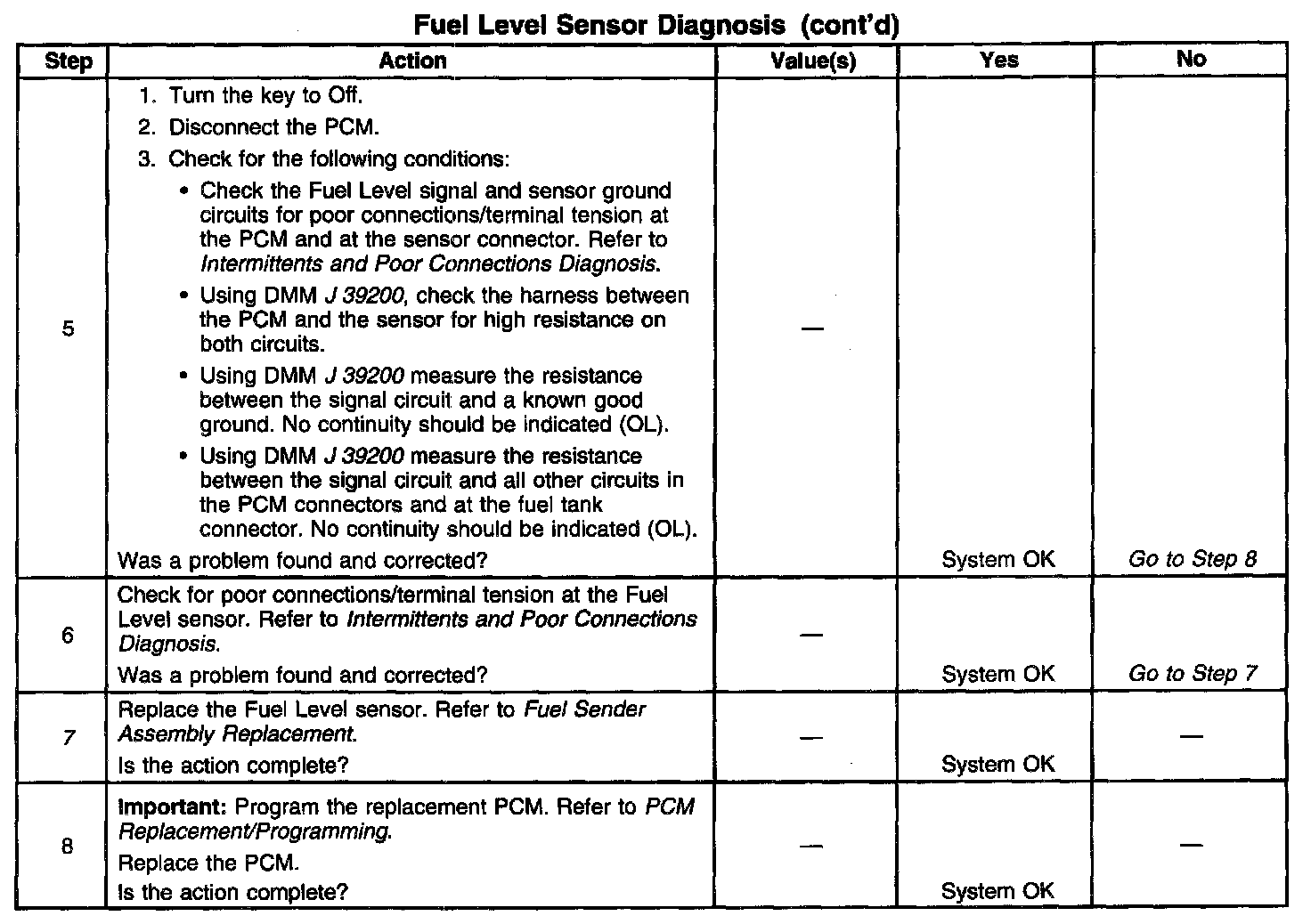
The numbers below refer to the step numbers on the Diagnostic Table.
3. At 40 Ohms the scan tool should display Fuel Level close to 0 percent. At 248 Ohms the display should be close to 100 percent. As the resistance is increased, there should be a corresponding fuel level increase. If any spikes, dips or erratic readings occur, or if the low and high resistance values do not correspond close to 0 percent and 100 percent (values are skewed), the related circuitry should be checked before replacing the sensor.
7. Before replacing the sensor, check for the possibility of foreign material in the fuel tank that may inhibit proper float arm movement (including ice). Check for the float arm contacting Other components on the fuel pump/sender assembly.