Fuel Level Sensor Diagnosis
Circuit Description
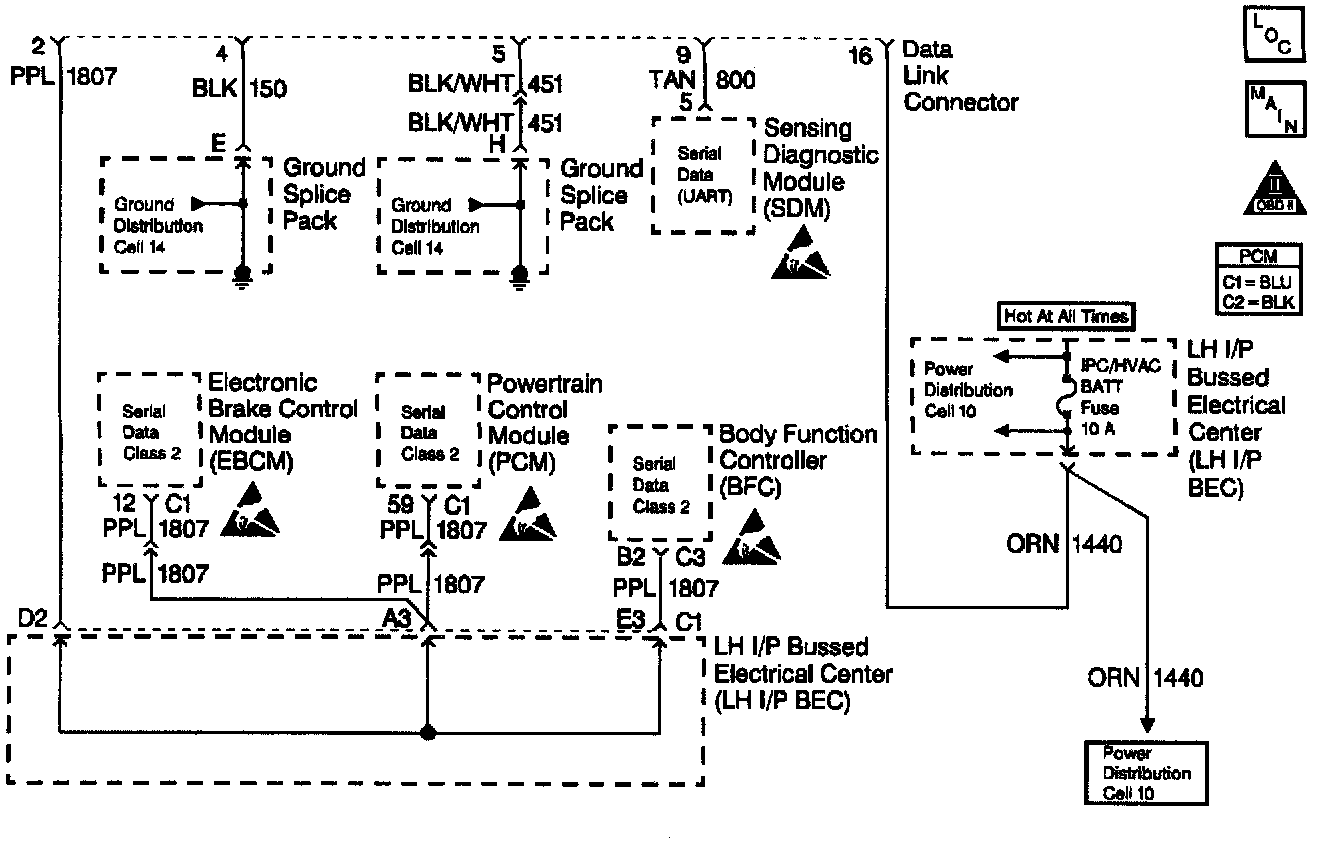
The PCM uses a fuel level input from the Body Function Controller (BFC) to determine if the fuel level is too high or too low to be able to accurately detect EVAP system failures. Fuel level is used to calculate expected vapor pressures within the fuel system. These pressures vary as fuel level changes, so their importance is critical to determining if the Evaporative Emissions System is operating properly. If a BFC DTC is set along with an EVAP System DTC, the EVAP DTC can not be considered valid until BFC DTC is repaired and cleared.
Diagnostic Aids
If a BFC DTC is set along with an EVAP System DTC, the EVAP DTC can not be considered valid until BFC DTC is repaired and cleared. A DTC P1601 or P1610 set along with a BFC DTC, indicates that the PCM was unable to obtain updated fuel level information due to a serial data communication problem with the BFC.
Test Description
Number(s) below refer to the step number(s) on the Diagnostic Table.
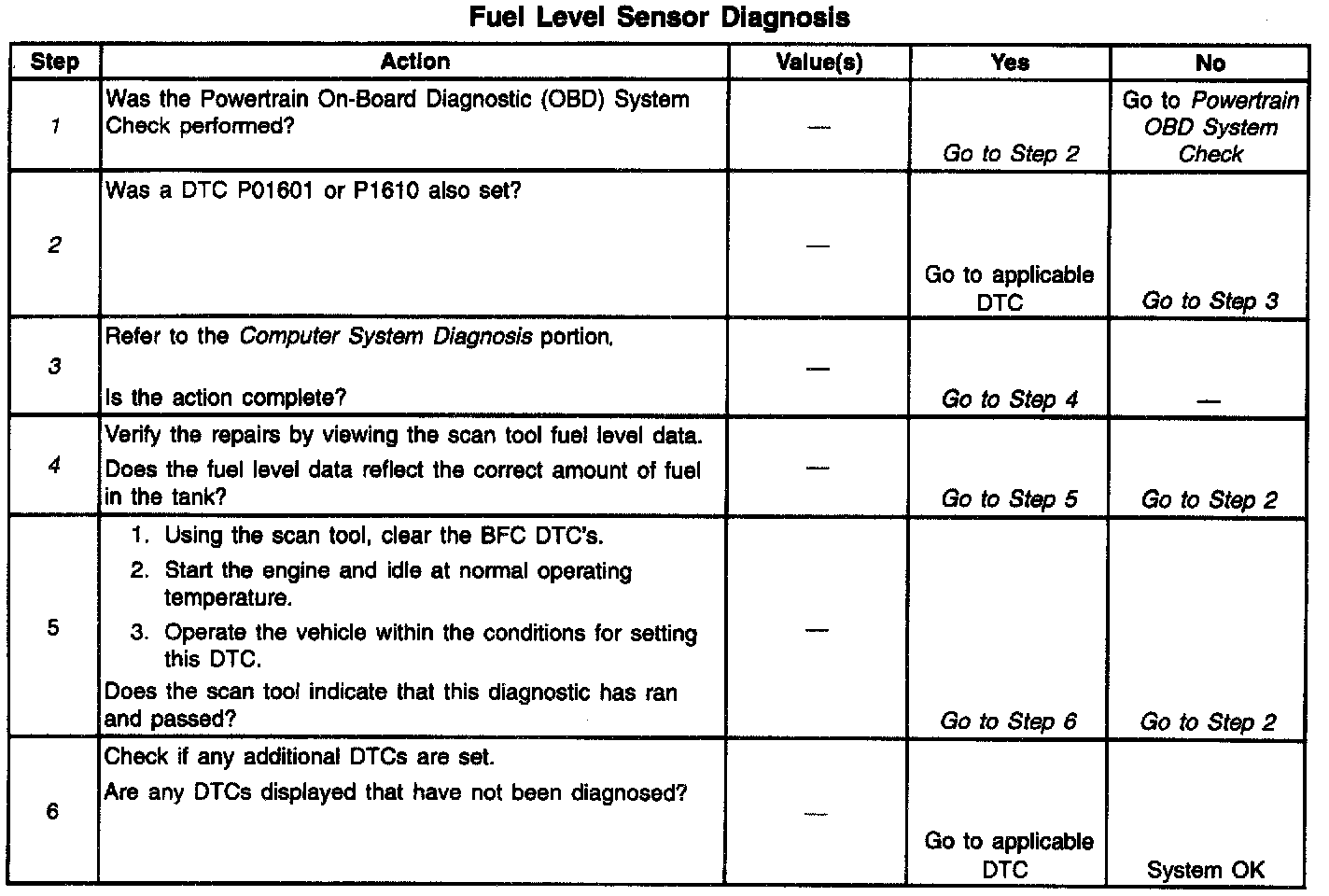
1. The Powertrain OBD System Check prompts the technician to complete some basic checks and store the freeze frame and failure records data on the scan tool if applicable. This creates an electronic copy of the data taken when the fault occurred. The information is then stored on the scan tool for later reference.
2. DTC P1601 or P1610 must be diagnosed before BFC DTC as the only problem may have been the serial communication problem and the vehicle was driven more than 120 miles before it was brought in for service.
3. The fuel level sensor and BFC are diagnosed in the Computer System Diagnosis.
4. Repair verification is an important step in any diagnostic procedure. Comparing the fuel level readings before and after the repairs is a good way to determine if a repair has been successful.