Evaporative Emissions System: Testing and Inspection
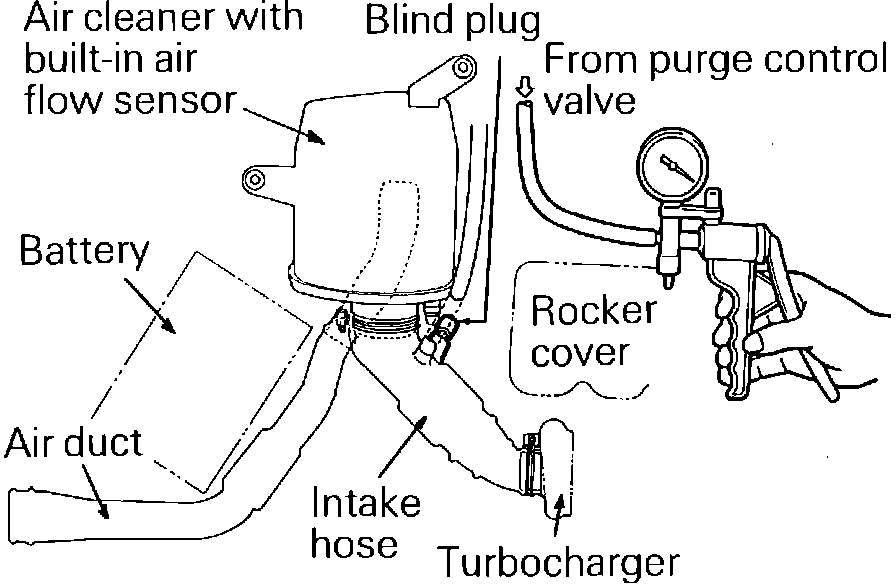
Fig. 170 Testing the purge control system:
SYSTEM TESTING
1. Disconnect the purge air hose from the air intake hose and plug the air intake hose, Fig. 170. Then connect a hand vacuum pump to the disconnected purge air hose.
2. Verify that when the engine coolant temperature is less than 45 degrees C (113 degrees F) that 13 kPa (4.0 in. Hg) of vacuum will hold without leaking at 2,500 rpm.
3. Verify that when the engine coolant temperature is above 85 degrees C ( 185 degrees F) that 13 kPa (4.0 in Hg) of vacuum is held without leaking at idle and the same vacuum leaks at 2,500 rpm.
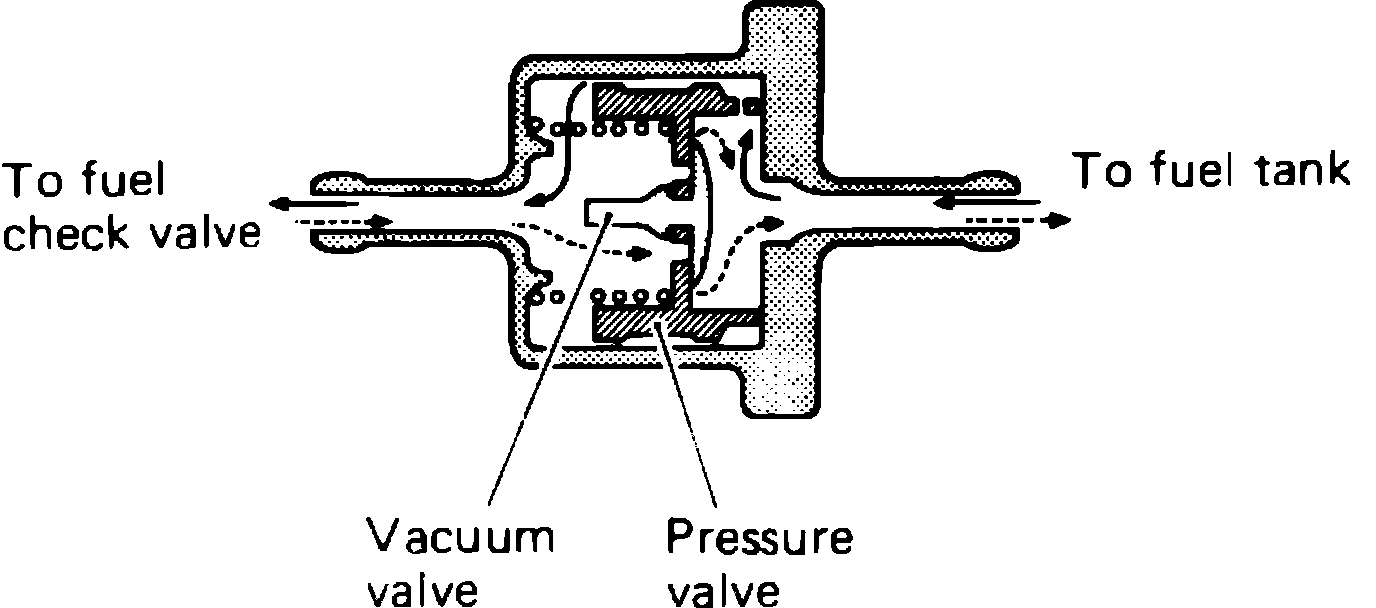
Overfill Limiter (Two Way Valve):
OVERFILL LIMITER VALVE
Remove the overfill limiter valve and blow gently through both ends. Air should pass through the valve in both directions with slight resistance.
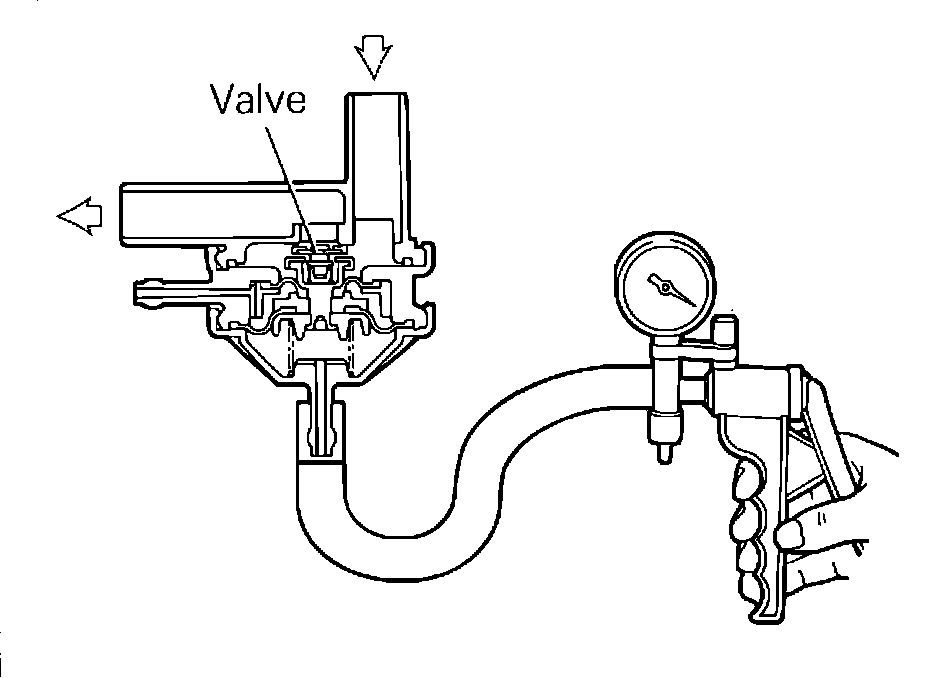
Fig. 171 Testing the purge control valve:
PURGE CONTROL VALVE
1. Remove the purge control valve.
2. Connect a hand vacuum pump to the vacuum nipple of the PCV, Fig. 171.
3. Apply a vacuum of 53 kPa (15 in. Hg) and verify that the vacuum control diaphragm chamber is air tight.
4. Verify that with no vacuum applied air does not pass through the valve and that with 27 kPa (8 in. Hg) air does pass through the valve.
Fig. 172 Testing the purge control valve:
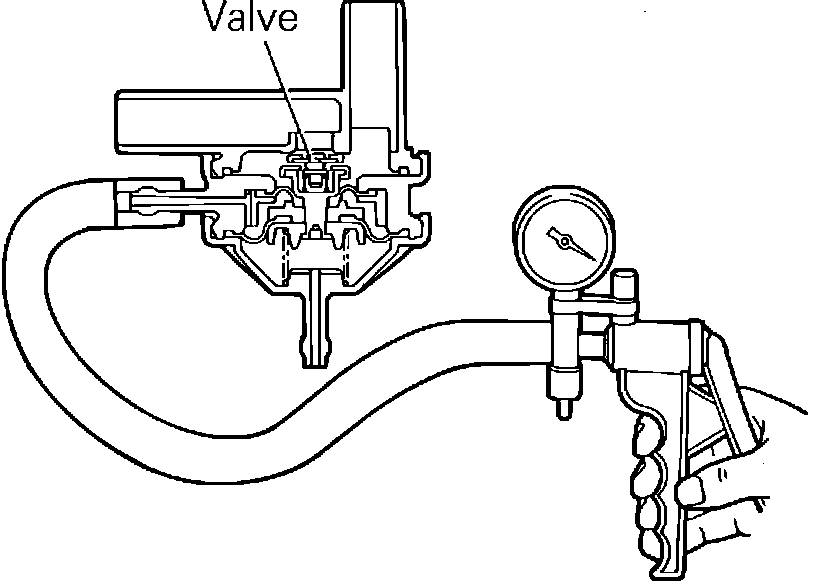
5. Connect a hand vacuum pump to the positive pressure nipple of the purge control valve, Fig. 172.
6. Apply 53 kPa (15 psi) and verify that the valve is leak tight.
Fig. 173 Testing the thermo valve:
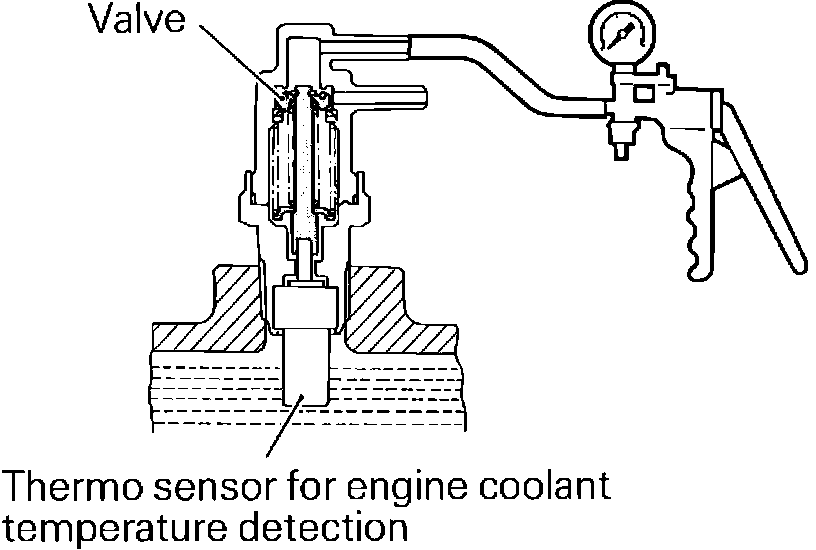
THERMO VALVE
1. Disconnect the vacuum hoses (black stripe, blue stripe) from the thermo valve and connect a hand vacuum pump to the thermo valve, Fig. 173
.
2. Apply vacuum to the thermo valve and verify that when the coolant temperature is less than 45 degrees C (113 degrees F) vacuum leaks.
3. Verify that when the coolant temperature is greater than 80 degrees C (176 degrees F) vacuum holds.
Note: If the thermo valve fails and must be replaced use 3M locking sealant 4171 or equivalent and torque the thermo valve to 20 to 40 Nm (15-30 ft. lbs.). Do not use wrenches or pliers on the resin part of the valve during installation.