Troubleshooting Guide
GENERAL NOTESA problem with the EC-AT may be caused by the engine, the EC-AT powertrain, the hydraulic control system, or the electronic control system; therefore, when troubleshooting begin with those points which can be inspected quickly and easily. The recommended troubleshooting sequence is described below.
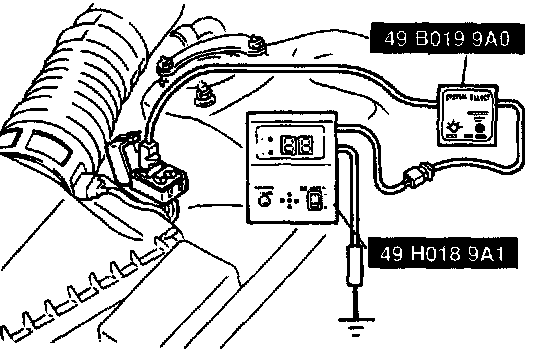
Step 1: Self-diagnostic System Inspection
Check for diagnostic trouble code(s) memorized in the Powertrain Control Module (Transmission) by using the EC-AT Tester or Self-Diagnosis Checker.
NOTE: You can also check the flashing sequence of the HOLD indicator light for diagnostic trouble code(s).
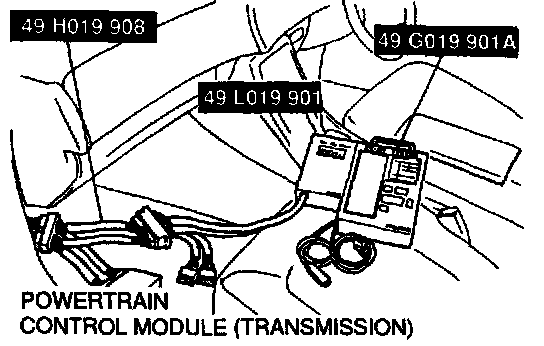
Step 2: Electric Signal Inspection
Check the signals to/from the Powertrain Control Module (Transmission) with the EC-AT Tester.
NOTE: Signals can also be checked by checking the Powertrain Control Module (Transmission) terminal voltages with the Engine Signal Monitor or a voltmeter.
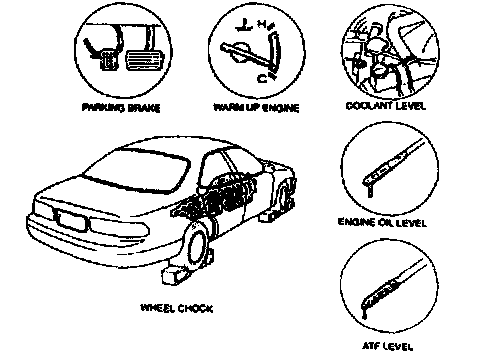
Step 3: Mechanical System Test
Check the engine stall speed, time lag, and line pressure.
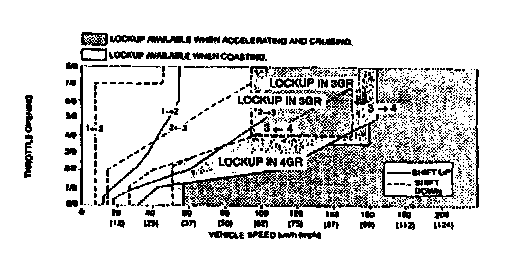
Step 4: Road Test
Check the shift point, shift schedule, and shift shock.
Use the Powertrain Control Module (Transmission) when checking vehicle speed, engine speed, throttle opening (throttle position sensor voltage), and gear position.