Seats: Service and Repair: General Procedures
Air Bag Simulator:
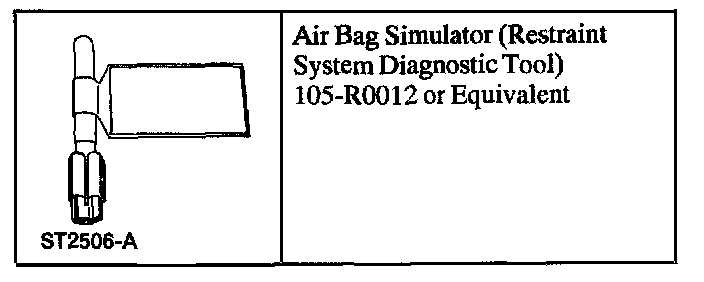
SPECIAL TOOL(S)
DEACTIVATION
WARNING:
^ ALWAYS WEAR SAFETY GLASSES WHEN REPAIRING AN AIR BAG SUPPLEMENTAL RESTRAINT SYSTEM (SRS) VEHICLE AND WHEN HANDLING AN AIR BAG MODULE. THIS WILL REDUCE THE RISK OF INJURY IN THE EVENT OF AN ACCIDENTAL DEPLOYMENT.
^ CARRY A LIVE AIR BAG MODULE WITH THE AIR BAG AND TRIM COVER POINTED AWAY FROM YOUR BODY. THIS WILL REDUCE THE RISK OF INJURY IN THE EVENT OF AN ACCIDENTAL DEPLOYMENT.
^ DO NOT SET A LIVE AIR BAG MODULE DOWN WITH THE TRIM COVER FACE DOWN. THIS WILL REDUCE THE RISK OF INJURY IN THE EVENT OF AN ACCIDENTAL DEPLOYMENT.
^ AFTER DEPLOYMENT, THE AIR BAG SURFACE CAN CONTAIN DEPOSITS OF SODIUM HYDROXIDE, A PRODUCT OF THE GAS GENERANT COMBUSTION THAT IS IRRITATING TO THE SKIN. WASH YOUR HANDS WITH SOAP AND WATER AFTERWARDS.
^ NEVER PROBE THE CONNECTORS ON THE AIR BAG MODULE. DOING SO CAN RESULT IN AIR BAG DEPLOYMENT, WHICH CAN RESULT IN PERSONAL INJURY.
^ THE SAFETY BELT BUCKLE PRETENSIONER AND SAFETY BELT RETRACTOR PRETENSIONER ARE PYROTECHNIC DEVICES. NEVER PROBE A PRETENSIONER ELECTRICAL CONNECTOR. DOING SO COULD RESULT IN PRETENSIONER OR AIR BAG DEPLOYMENT AND COULD RESULT IN PERSONAL INJURY.
^ VEHICLE SENSOR ORIENTATION IS CRITICAL FOR PROPER SYSTEM OPERATION. IF A VEHICLE EQUIPPED WITH AN AIR BAG SUPPLEMENTAL RESTRAINT SYSTEM (SRS) IS INVOLVED IN A COLLISION, INSPECT THE SENSOR MOUNTING BRACKET AND WIRING PIGTAIL FOR DEFORMATION. REPLACE AND PROPERLY POSITION THE SENSOR OR ANY OTHER DAMAGED SUPPLEMENTAL RESTRAINT SYSTEM (SRS) COMPONENTS WHETHER OR NOT THE AIR BAG IS DEPLOYED.
^ THE RESTRAINT SYSTEM DIAGNOSTIC TOOL IS FOR RESTRAINT SYSTEM SERVICE ONLY. REMOVE FROM VEHICLE PRIOR TO ROAD USE. FAILURE TO REMOVE COULD RESULT IN INJURY AND POSSIBLE VIOLATION' OF VEHICLE SAFETY STANDARDS.
NOTE:
^ If a seat equipped with a seat mounted side air bag and/or a safety belt pretensioner (if equipped) system is being serviced, the air bag system must be deactivated.
^ Restraint system diagnostic tools MUST be installed under the seats in the seat side air bag (if equipped) and safety belt pretensioner (if equipped) to floor connectors.
^ Diagnostics or repairs are not to be performed on a seat equipped with a seat side air bag with the seat in the vehicle. Prior to attempting to diagnose or repair a seat concern when equipped with a seat side air bag, the seat must be removed from the vehicle and the restraint system diagnostic tools must be installed in the seat side air bag electrical connectors. The restraint system diagnostic tools must be removed prior to operating the vehicle over the road.
^ After diagnosing or repairing an SRS, the restraint system diagnostic tools must be removed before operating the vehicle over the road.
^ After diagnosing or repairing a seat system, the restraint system diagnostic tools must be removed before operating the vehicle over the road.
^ The SRS must be fully operational and free of faults before releasing the vehicle to the customer.
All vehicles
1. Disconnect the battery ground cable and wait at least one minute to allow for the depletion of the restraint system backup power supply.
WARNING:
^ TO AVOID ACCIDENTAL DEPLOYMENT AND POSSIBLE PERSONAL INJURY, THE BACKUP POWER SUPPLY MUST BE DEPLETED BEFORE REPAIRING OR REPLACING ANY FRONT OR SIDE AIR BAG SUPPLEMENTAL RESTRAINT SYSTEM (SRS) COMPONENTS AND BEFORE SERVICING, REPLACING, ADJUSTING OR STRIKING COMPONENTS NEAR THE FRONT OR SIDE AIR BAG SENSORS, SUCH AS DOORS, INSTRUMENT PANEL, CONSOLE, DOOR LATCHES, STRIKERS, SEATS AND HOOD LATCHES.
^ PLEASE REFER TO COMPONENT OR SYSTEMS TO DETERMINE LOCATION OF THE FRONT AIR BAG SENSORS.
^ THE SIDE AIR BAG SENSORS ARE LOCATED AT OR NEAR THE BASE OF THE B-PILLAR.
^ TO DEPLETE THE BACKUP POWER SUPPLY ENERGY, DISCONNECT THE BATTERY GROUND CABLE AND WAIT AT LEAST ONE MINUTE TO ALLOW FOR THE DEPLETION OF THE RESTRAINT SYSTEM BACKUP POWER SUPPLY. BE SURE TO DISCONNECT AUXILIARY BATTERIES AND POWER SUPPLIES (IF EQUIPPED).
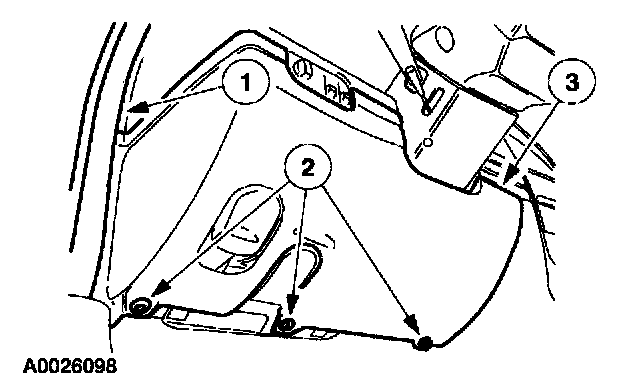
2. Remove the lower steering column opening finish panel.
1 Remove the weatherstripping.
2 Remove the screws.
3 Pull out to release the retaining clips and remove the lower steering column opening finish panel.
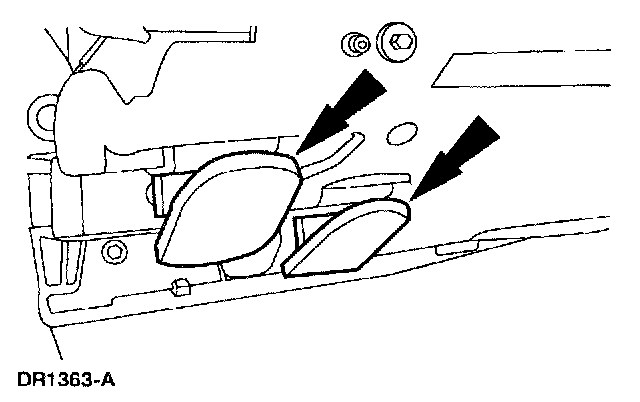
3. Remove the two screws. Position the emergency brake and hood release assemblies out of the way.
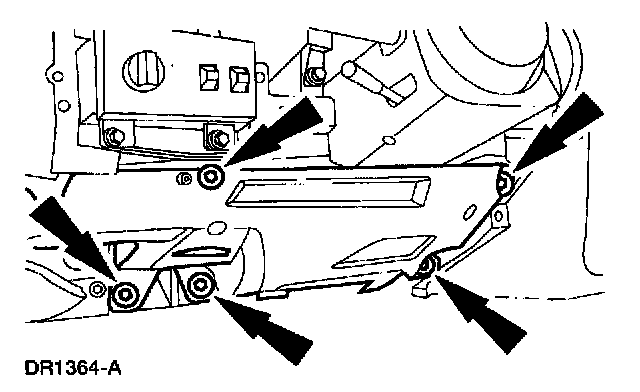
4. Remove the five bolts and the steering column opening reinforcement.
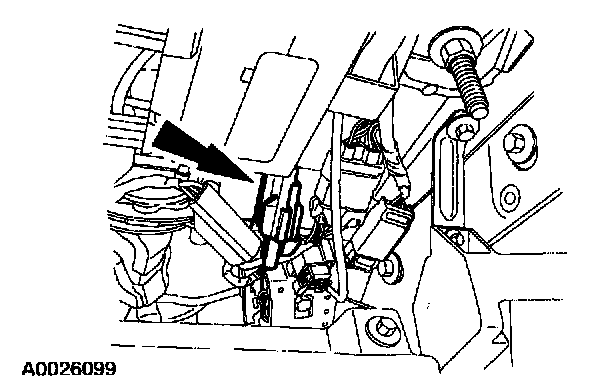
5. Release the tab and disconnect the clockspring electrical connector, for the driver air bag module, at the base of the steering column.
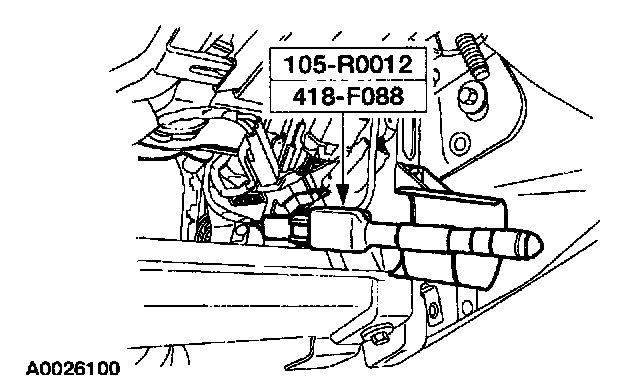
6. Attach the restraint system diagnostic tool to the vehicle harness side of the clockspring electrical connector.
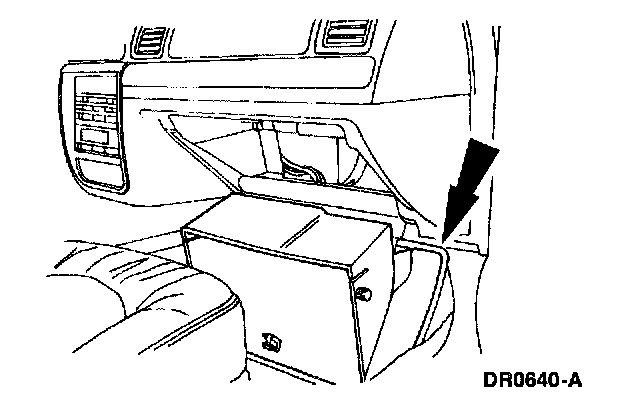
7. Push in on the two tabs and position the glove compartment door downward.
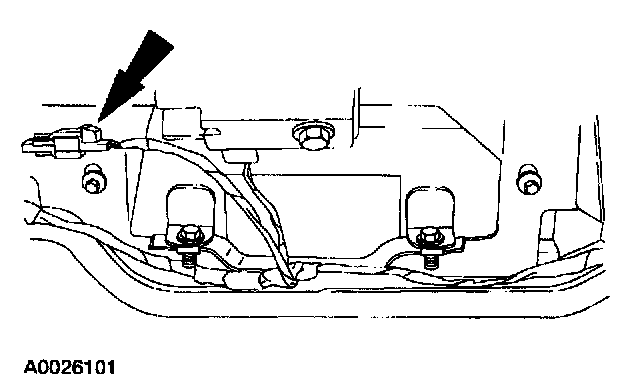
8. Release the tab and disconnect the passenger air bag module electrical connector.
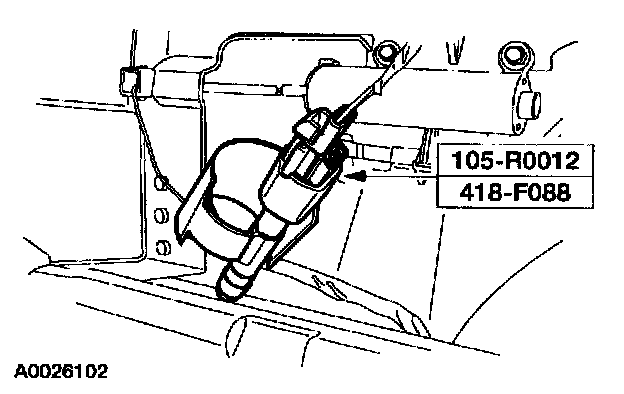
9. Attach the restraint system diagnostic tool to the vehicle harness side of the passenger air bag electrical connector.
Vehicles without side air bags
10. If the side air bag bridge resistor is removed, an open circuit fault will be generated by the restraints control module (RCM).
If a restraint system diagnostic tool is installed at the side air bag floor connector, a low resistance fault will be generated by the RCM.
CAUTION: Do not deactivate the side air bag module circuit by removing the side air bag bridge resistor from the side air bag floor connector.
Vehicles with side air bags
11. Connect the battery ground cable.
12. Move and tilt the front seats to their highest and forward most position.
13. Disconnect the battery ground cable and wait at least one minute to allow for the depletion of the restraint system backup power supply.
WARNING:
^ TO AVOID ACCIDENTAL DEPLOYMENT AND POSSIBLE PERSONAL INJURY, THE BACKUP POWER SUPPLY MUST BE DEPLETED BEFORE REPAIRING OR REPLACING ANY FRONT OR SIDE AIR BAG SUPPLEMENTAL RESTRAINT SYSTEM (SRS) COMPONENTS AND BEFORE SERVICING, REPLACING, ADJUSTING OR STRIKING COMPONENTS NEAR THE FRONT OR SIDE AIR BAG SENSORS, SUCH AS DOORS, INSTRUMENT PANEL, CONSOLE, DOOR LATCHES, STRIKERS, SEATS AND HOOD LATCHES.
^ PLEASE REFER TO COMPONENT OR SYSTEMS TO DETERMINE LOCATION OF THE FRONT AIR BAG SENSORS.
^ THE SIDE AIR BAG SENSORS ARE LOCATED AT OR NEAR THE BASE OF THE B-PILLAR.
^ TO DEPLETE THE BACKUP POWER SUPPLY ENERGY, DISCONNECT THE BATTERY GROUND CABLE AND WAIT AT LEAST ONE MINUTE TO ALLOW FOR THE DEPLETION OF THE RESTRAINT SYSTEM BACKUP POWER SUPPLY. BE SURE TO DISCONNECT AUXILIARY BATTERIES AND POWER SUPPLIES (IF EQUIPPED).
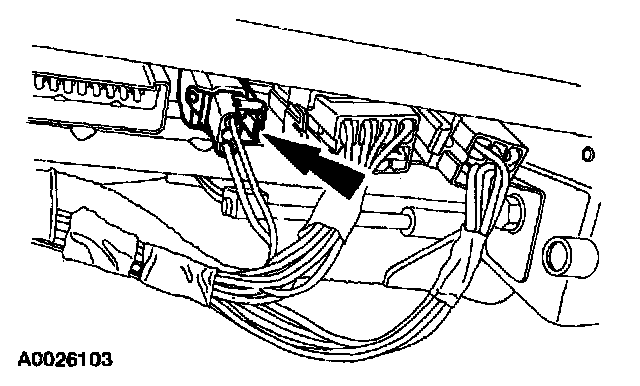
14. Release the tab and disconnect the passenger seat side air bag electrical connector.
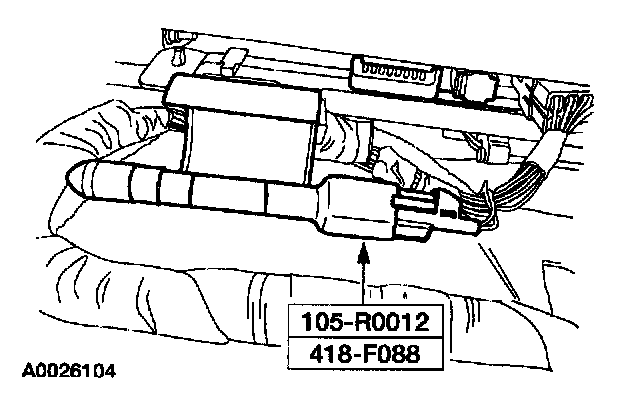
15. Attach the restraint system diagnostic tool to the passenger seat side air bag floor electrical connector.
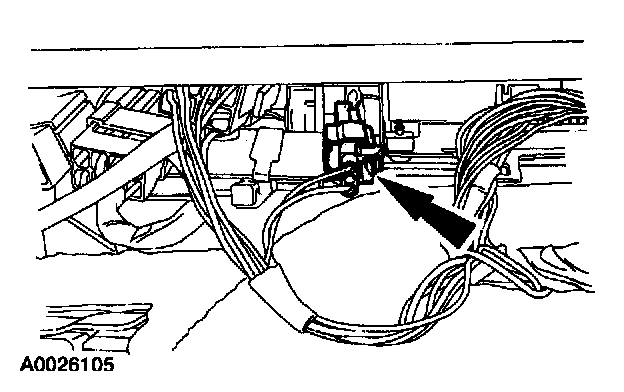
16. Release the tab and disconnect the driver seat side air bag electrical connector.
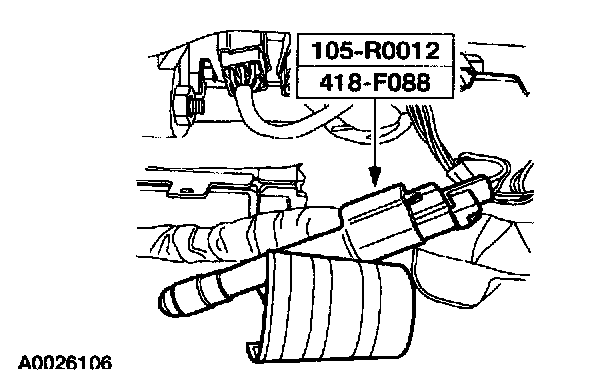
17. Attach the restraint system diagnostic tool to the driver seat side air bag floor electrical connector.
All vehicles
18. Connect the battery ground cable.
19. With the restraint system diagnostic tools installed at all deployable devices, prove out the Supplemental Restraint System (SRS).
20. Disconnect the battery ground cable and wait at least one minute to allow for the depletion of the restraint system backup power supply.
REACTIVATION
WARNING: TO AVOID THE RISK OF SERIOUS PERSONAL INJURY, READ AND FOLLOW ALL WARNINGS, NOTES AND INSTRUCTIONS AT THE BEGINNING OF THE DEACTIVATION PROCEDURE.
Vehicles with side air bags
1. Remove the restraint system diagnostic tool from the driver seat side air bag floor electrical connector.
2. Connect the driver seat side air bag electrical connector.
3. Remove the restraint system diagnostic tool from the passenger seat side air bag floor electrical connector.
4. Connect the passenger seat side air bag electrical connector.
5. Connect the battery ground cable.
6. Position the front seats rearward.
7. Disconnect the battery ground cable and wait at least one minute to allow for the depletion of the restraint system backup power supply.
WARNING:
^ TO AVOID ACCIDENTAL DEPLOYMENT AND POSSIBLE PERSONAL INJURY, THE BACKUP POWER SUPPLY MUST BE DEPLETED BEFORE REPAIRING OR REPLACING ANY FRONT OR SIDE AIR BAG SUPPLEMENTAL RESTRAINT SYSTEM (SRS) COMPONENTS AND BEFORE SERVICING, REPLACING, ADJUSTING OR STRIKING COMPONENTS NEAR THE FRONT OR SIDE AIR BAG SENSORS, SUCH AS DOORS, INSTRUMENT PANEL, CONSOLE, DOOR LATCHES, STRIKERS, SEATS AND HOOD LATCHES.
^ PLEASE REFER TO COMPONENT OR SYSTEMS TO DETERMINE LOCATION OF THE FRONT AIR BAG SENSORS.
^ THE SIDE AIR BAG SENSORS ARE LOCATED AT OR NEAR THE BASE OF THE B-PILLAR.
^ TO DEPLETE THE BACKUP POWER SUPPLY ENERGY, DISCONNECT THE BATTERY GROUND CABLE AND WAIT AT LEAST ONE MINUTE TO ALLOW FOR THE DEPLETION OF THE RESTRAINT SYSTEM BACKUP POWER SUPPLY. BE SURE TO DISCONNECT AUXILIARY BATTERIES AND POWER SUPPLIES (IF EQUIPPED).
All vehicles
8. Remove the restraint system diagnostic tool from the vehicle harness side of the passenger air bag electrical connector.
9. Connect the passenger air bag module electrical connector.
10. Close the glove compartment.
11. Remove the restraint system diagnostic tool from the vehicle harness side of the clockspring electrical connector.
12. Connect the clockspring electrical connector, for the driver air bag module, at the base of the steering column.
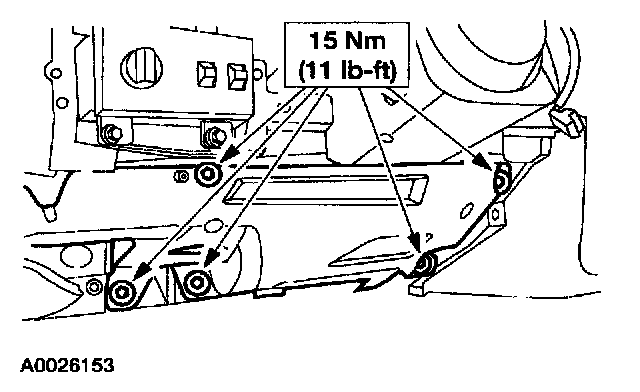
13. Position the steering column opening reinforcement. Install the screws.
14. Position the emergency brake and hood release assemblies. Install the two screws.
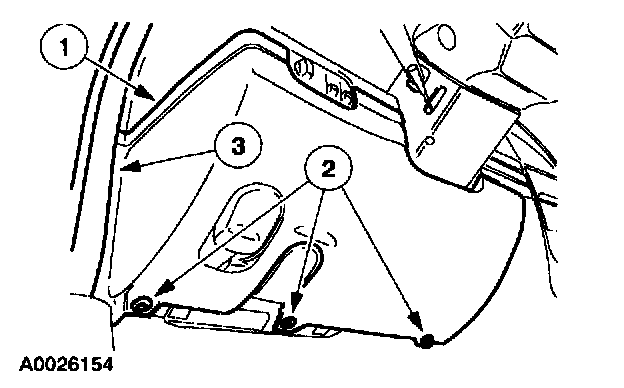
15. Install the lower steering column opening finish panel to the instrument panel.
1 Position the lower steering column opening finish panel to the instrument panel and push in, seating the retaining clips.
2 Install the screws.
3 Install the weatherstripping.
16. Connect the battery ground cable.
17. With all the restraint system diagnostic tools removed, prove out the Supplemental Restraint System (SRS).
WARNING: THE RESTRAINT SYSTEM DIAGNOSTIC TOOL IS FOR RESTRAINT SYSTEM SERVICE ONLY. REMOVE FROM VEHICLE PRIOR TO ROAD USE. FAILURE TO REMOVE COULD RESULT IN INJURY AND POSSIBLE VIOLATION OF VEHICLE SAFETY STANDARDS.