Electrically Heated Thermostat
Electrically Heated Thermostat
the electrically heated thermostat is used to regulate the engine coolant temperature. the thermostat regulates the coolant temperature depending upon engine load and vehicle speed. This allows the engine coolant temperature to be raised when the engine is operating at part load. Raising the coolant temperature while the engine is at part load has a beneficial effect on fuel consumption and emissions.
If a conventional thermostat with higher constant operating temperature is used poor response when accelerating and in traffic could result.
the thermostat is controlled by the ECM is response to engine load against a 'map' stored within the ECM.
the map is based upon the following inputs:
- Engine load
- Engine speed
- Vehicle speed
- Intake air temperature
- Coolant temperature.
the thermostat unit is a one piece construction comprising the thermostat, thermostat housing and heater element. the housing is of a die-cast aluminium. the electrical connection for the heater element is housed in the body. the heater element is an expanding (wax) element.
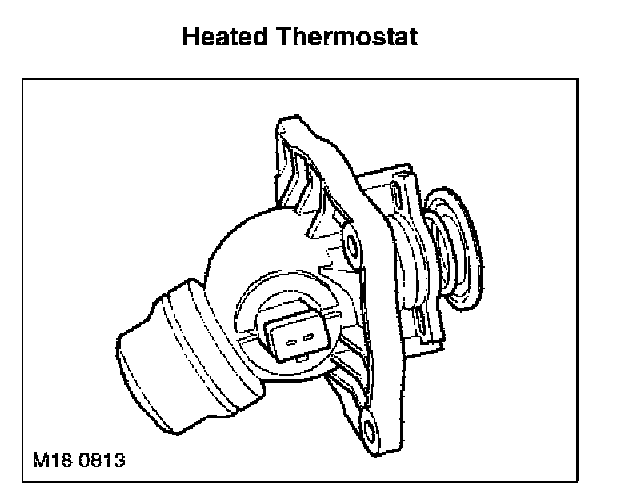
the thermostat is set to open when the coolant temperature reaches 103°C at the thermostat. Once the coolant has passed through the engine its temperature is approximately 110°C at the engine temperature sensor.
If the ECM starts to regulate the system the ECM supplies an earth path for the heater element in the thermostat. This causes the element to expand and increase the opening dimension of the thermostat.
the warmer the element the sooner the thermostat opens and the lower the resulting coolant temperature is. the thermostat regulates the coolant temperature in the range 80°C to 103°C. the expanding element in the thermostat is heated to a higher temperature than the surrounding coolant to generate the correct opening aperture. Should the coolant temperature exceed 113°C the electrically heated thermostat is activated independently of the prevailing engine parameters.
Should the heated thermostat fail, (fault codes will be stored in the ECM) the EMS will ensure the safe operation of the engine and the thermostat will operate as a conventional unit.