Power Steering Line/Hose: Service and Repair
HOSE POWER STEERING PRESSUREREMOVAL
NOTE: Refer to STEERING - WARNING.
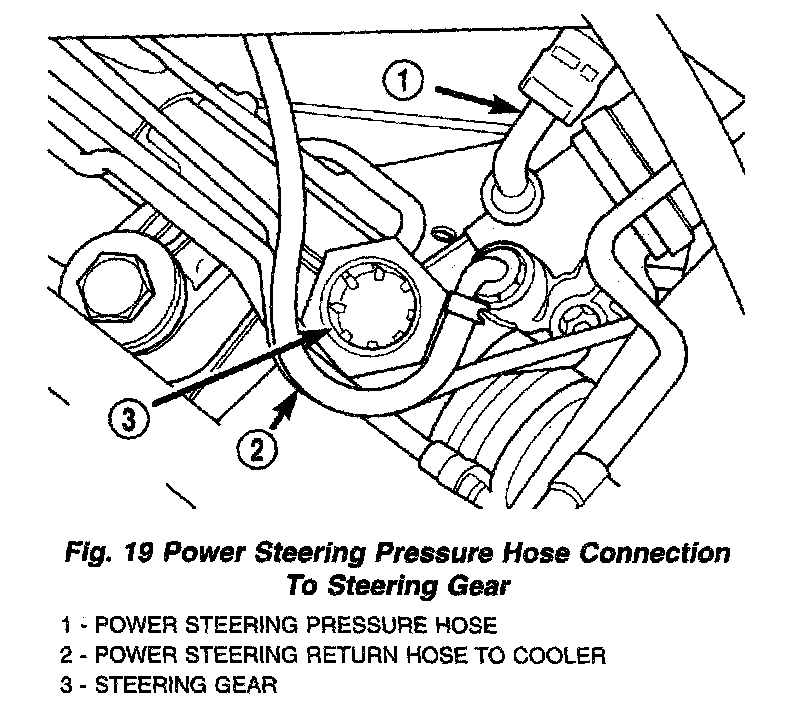
1. Remove the power steering fluid pressure hose from the steering gear. Allow the power steering fluid to drain from the hose.
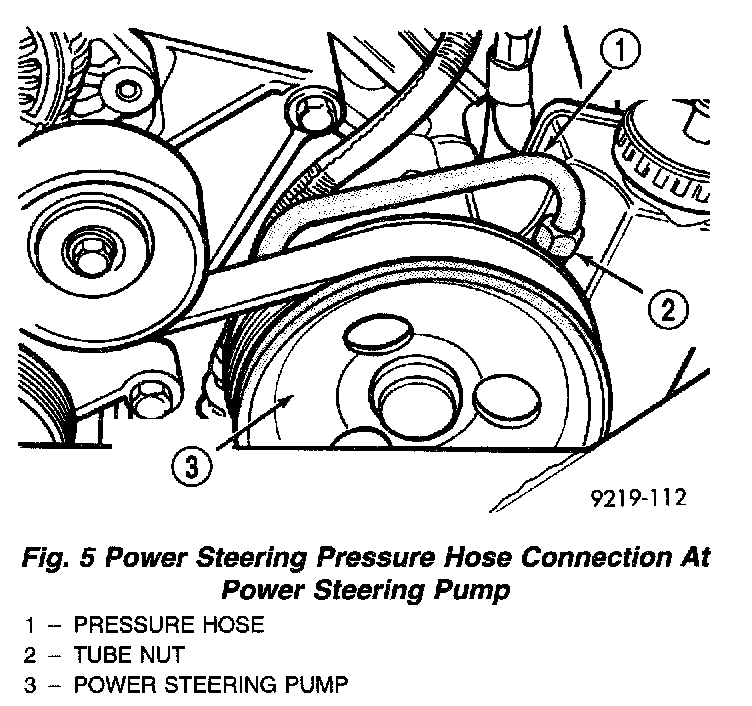
2. Loosen the tube nut attaching the power steering fluid pressure hose to the discharge fitting on power steering pump. Remove the power steering fluid pressure hose from vehicle.
3. Remove the power steering fluid pressure hose from vehicle. The hose is removed out through the top between power steering pump and engine block.
4. Remove and discard the O-ring seals at the end of the power steering hose tube.
INSTALLATION
1. Using a lint free towel, wipe clean the open power steering hose ends, power steering pump discharge fitting and steering gear port.
2. Install new O-ring seals on ends of power steering hose. Lubricate NEW O-ring seals using fresh clean power steering fluid.
3. Install the power steering pressure hose on the vehicle. The power steering pressure hose is to be routed between the power steering pump and the engine block.
4. Install the power steering pressure hose in the discharge fitting on the power steering pump. Be sure the end of the tube and O-ring seal is squarely seated in discharge fitting. Install pressure hose tube nut into the discharge fitting of power steering pump only finger tight,
5. Correctly route the power steering pressure hose to the pressure port on steering gear. Install the power steering pressure hose into the steering gear. Install the power steering pressure hose tube nut only hand tight. Be sure hose does not contact any areas that could cause abrasion to the hose, then tighten the tube nut to a torque of 29 Nm (252 inch lbs.).
6. Tighten the power steering pressure hose tube nut at the power steering pump to a torque of 29 Nm (252 inch lbs.).
CAUTION: Do not use automatic transmission fluid in power steering system. Only use Mopar Power Steering Fluid or equivalent.
7. Fill power steering pump reservoir to correct fluid level.
8. Start the engine and let run for a few seconds. then turn the engine off.
9. Add fluid if necessary. Repeat the above procedure until the fluid level remains constant after running the engine.
10. Raise the front wheels of vehicle off the ground.
11. Start the engine. Slowly turn the steering wheel right and left, lightly contacting the wheel stops. Then turn the engine off.
12. Add power steering fluid if necessary.
13. Lower the vehicle arid turn the steering wheel slowly from lock to lock.
14. Stop the engine. Check the fluid level and refill as required.
15. If the fluid is extremely foamy, allow the vehicle to stand a few minutes and repeat the above procedure.
16. Check for leaks at all hose connections.
HOSE POWER STEERING RETURN
REMOVAL
NOTE: Refer to STEERING - WARNING.
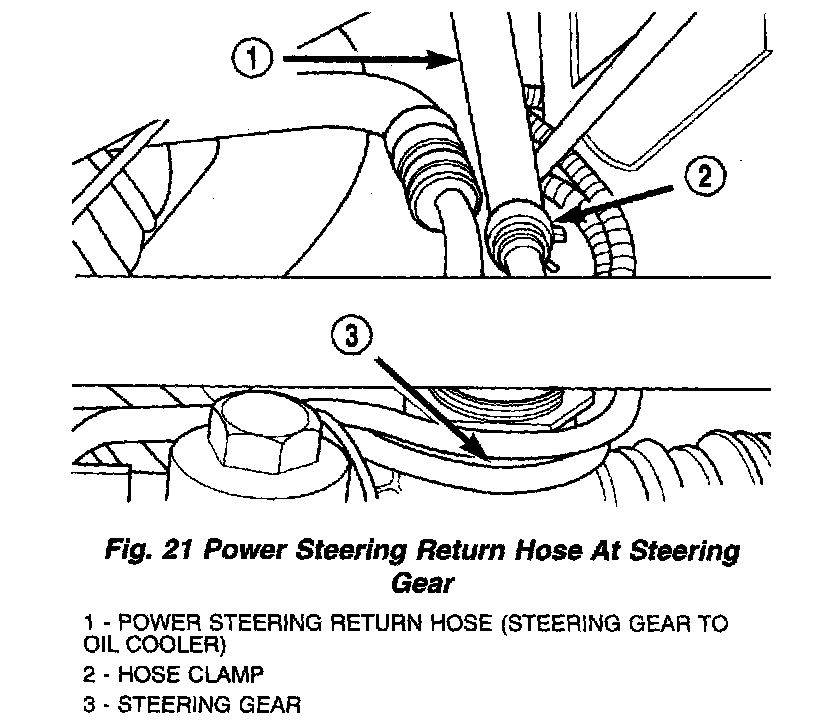
1. If lower power steering fluid return hose requires replacement, remove the hose clamp from the power steering fluid return hose, at the steering gear fitting. Remove the hose from steering gear fitting. Let excess power steering fluid drain from the return hose.
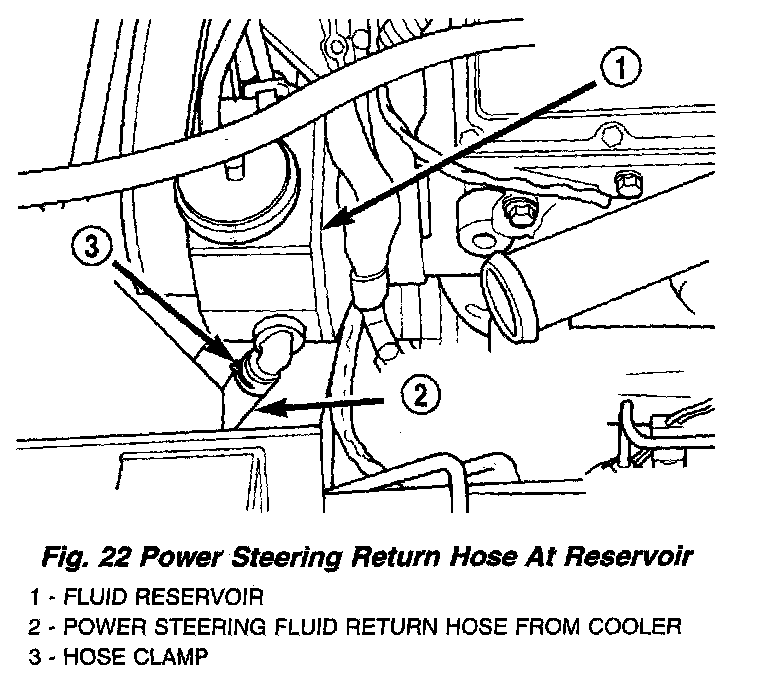
2. If upper power steering fluid return hose requires replacement, remove the hose clamp from the power steering fluid return hose, at power steering fluid reservoir.
3. If upper power steering fluid return hose requires replacement, remove the power steering fluid return hose from power steering fluid reservoir fitting. Use care when removing hose from power steering fluid reservoir fitting, fluid reservoir is plastic and could crack if excessive force is used.
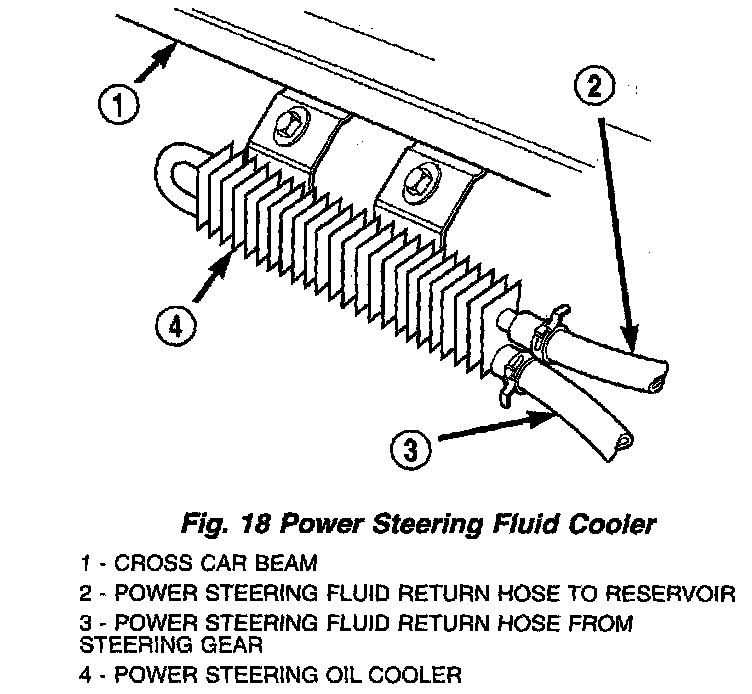
4. Remove hose clamp from the upper or lower power steering fluid return hose, whichever requires replacement, at power steering fluid cooler.
5. Remove the power steering fluid return hose requiring replacement from power steering fluid cooler.
INSTALLATION
1. Install hose clamps on replacement power steering return hose approximately 1 inch from the ends of the hose, before installing the hose.
2. If upper power steering return hose required replacement, install the power steering fluid return hose, on power steering fluid reservoir fitting. Install hose clamp on end of power steering return hose, so it is positioned above the upset bead on the reservoir fitting.
3. If lower power steering return hose required replacement, install the power steering fluid return hose on the steering gear. Check routing of return hose so it does not contact any surfaces that will cause abrasion to the hose.
4. Install the hose clamp on the power steering return hose. Be sure clamp is installed on hose, past the upset bead on steering gear return hose fitting.
5. Install the power steering fluid return hose requiring replacement on the correct fitting of the power steering fluid cooler. Move the hose clamp to the end of the return hose. Be sure clamp is installed on hose, past the upset bead on power steering oil cooler hose fitting.
CAUTION: Do not use automatic transmission fluid in power steering system. Only use Mopar Steering Fluid or equivalent.
6. Fill the power steering pump reservoir to the correct fluid level.
7. Start the engine and let run for a few seconds and then turn the engine off.
8. Add fluid if necessary. Repeat the above procedure until the fluid level remains constant after running the engine.
9. Raise the front wheels of the vehicle Writhe ground.
10. Start the engine. Slowly turn the steering wheel to the right and left, lightly contacting the wheel stops. Then turn the engine off.
11. Add more power steering fluid to the reservoir if necessary.
12. Lower the vehicle and turn the steering wheel slowly from lock to lock.
13. Stop the engine. Check the fluid level in the reservoir and add fluid as required.
14. If the fluid is extremely foamy, allow the vehicle to stand a few minutes and repeat the above procedure.
15. Check for leaks at all hose connections.