Crankshaft Position Sensor: Description and Operation
DescriptionCrankShaft Position (CKP) Sensor:
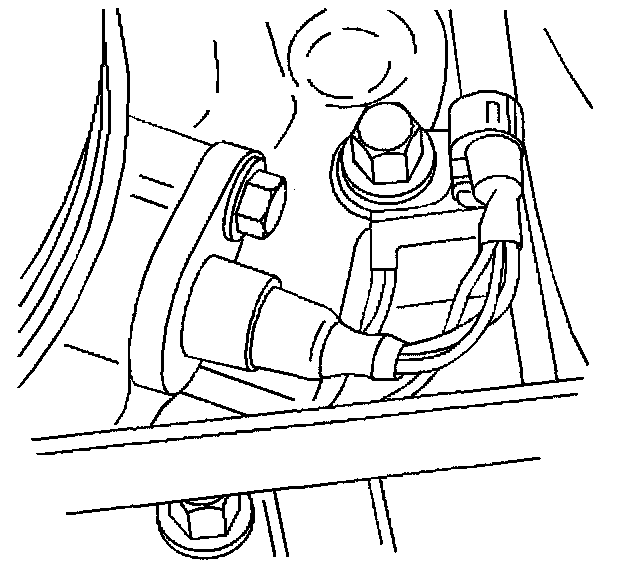
The Crankshaft Position (CKP) sensor is located in the front cover of the cylinder block near the crankshaft pulley. The CKP sensor produces an AC signal that increases in both frequency and amplitude as the engine speed increases. The CKP sensor signal is sent to the PCM in order to indicate the RPM and the crankshaft position. The PCM uses the CKP sensor signal along with the Camshaft Position (CMP) sensor signal for the following purposes:
^ To calculate the fuel injector pulse
^ To establish the piston position (top dead center) for the ignition timing
^ To start the ignition coil and fuel injection sequencing
Operation
The CKP sensor signal rotor has 34 teeth and is mounted on the crankshaft behind the timing chain cover and the crankshaft pulley. When the crankshaft rotates, the CKP sensor signal rotor teeth pass by the CKP sensor causing a fluctuation in the sensor's magnetic field. The fluctuation in the magnetic field induces a voltage in the CKP sensor circuitry. The sensor sends this signal to the PCM at rate of 34 signals per crankshaft revolution.