Quick Diagnosis Chart
Quick Diagnosis Chart (I):
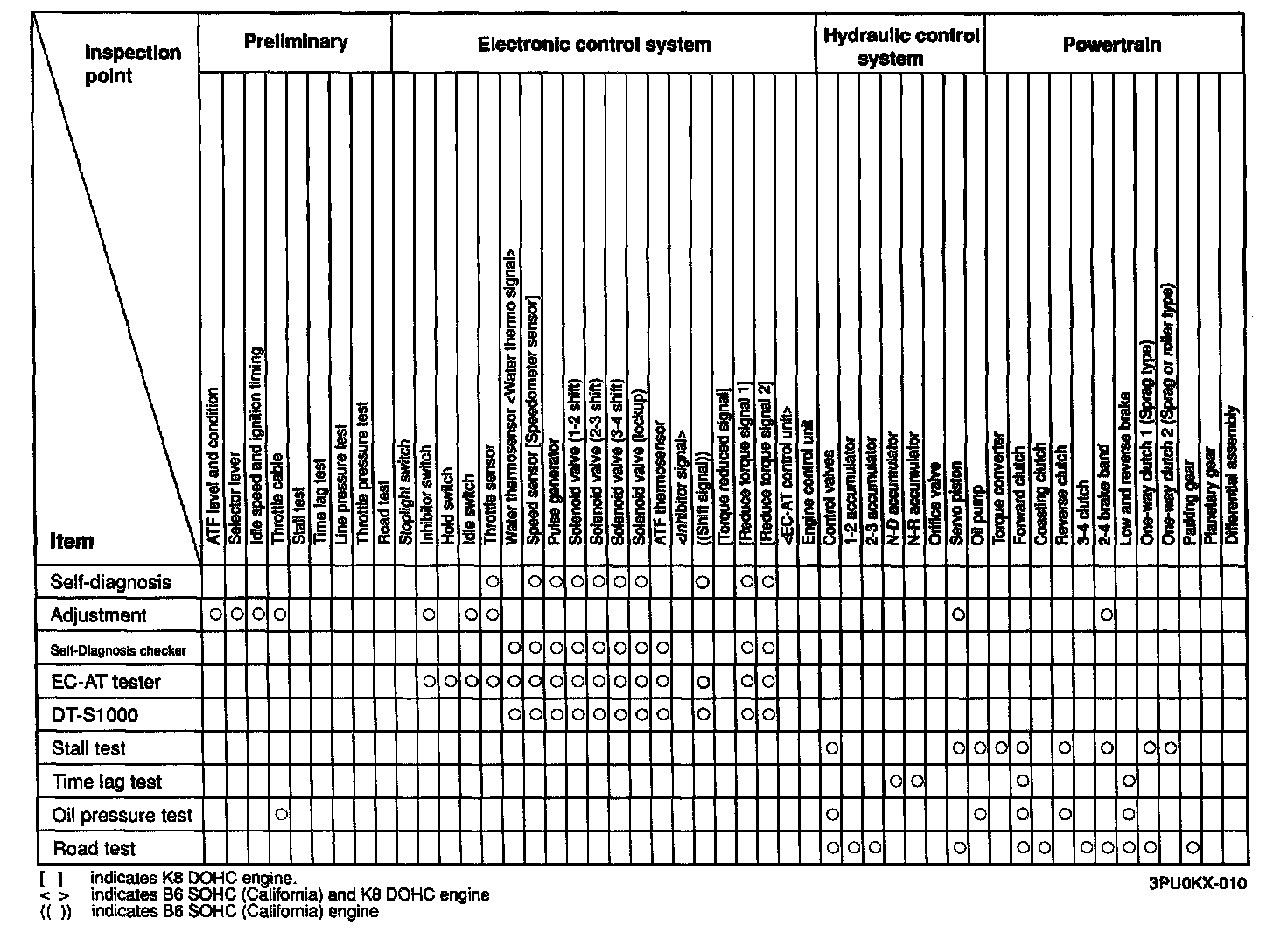
Quick Diagnosis Chart (II-I) Part 1:
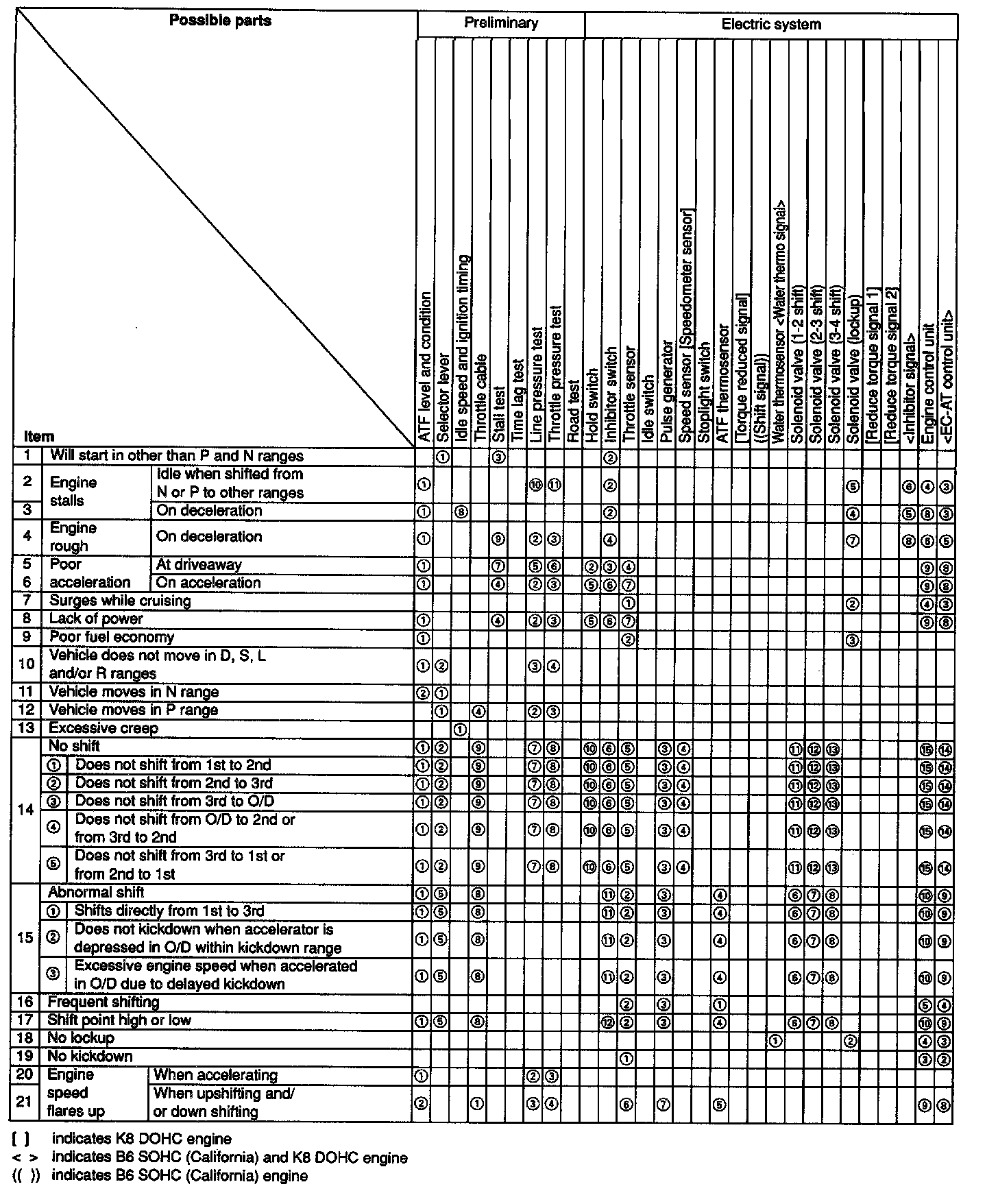
Quick Diagnosis Chart (II-I) Part 2:
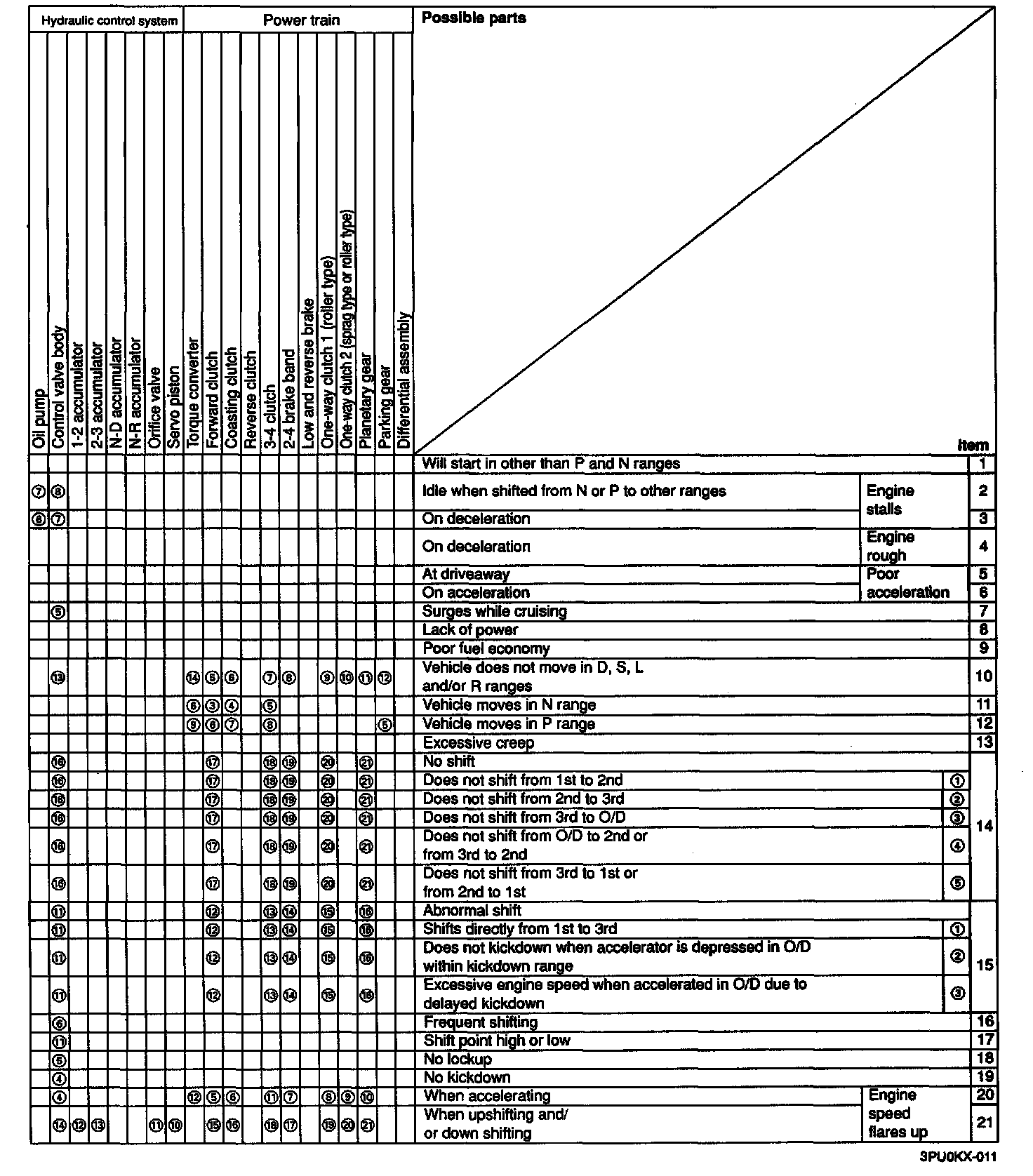
Quick Diagnosis Chart (II-2):
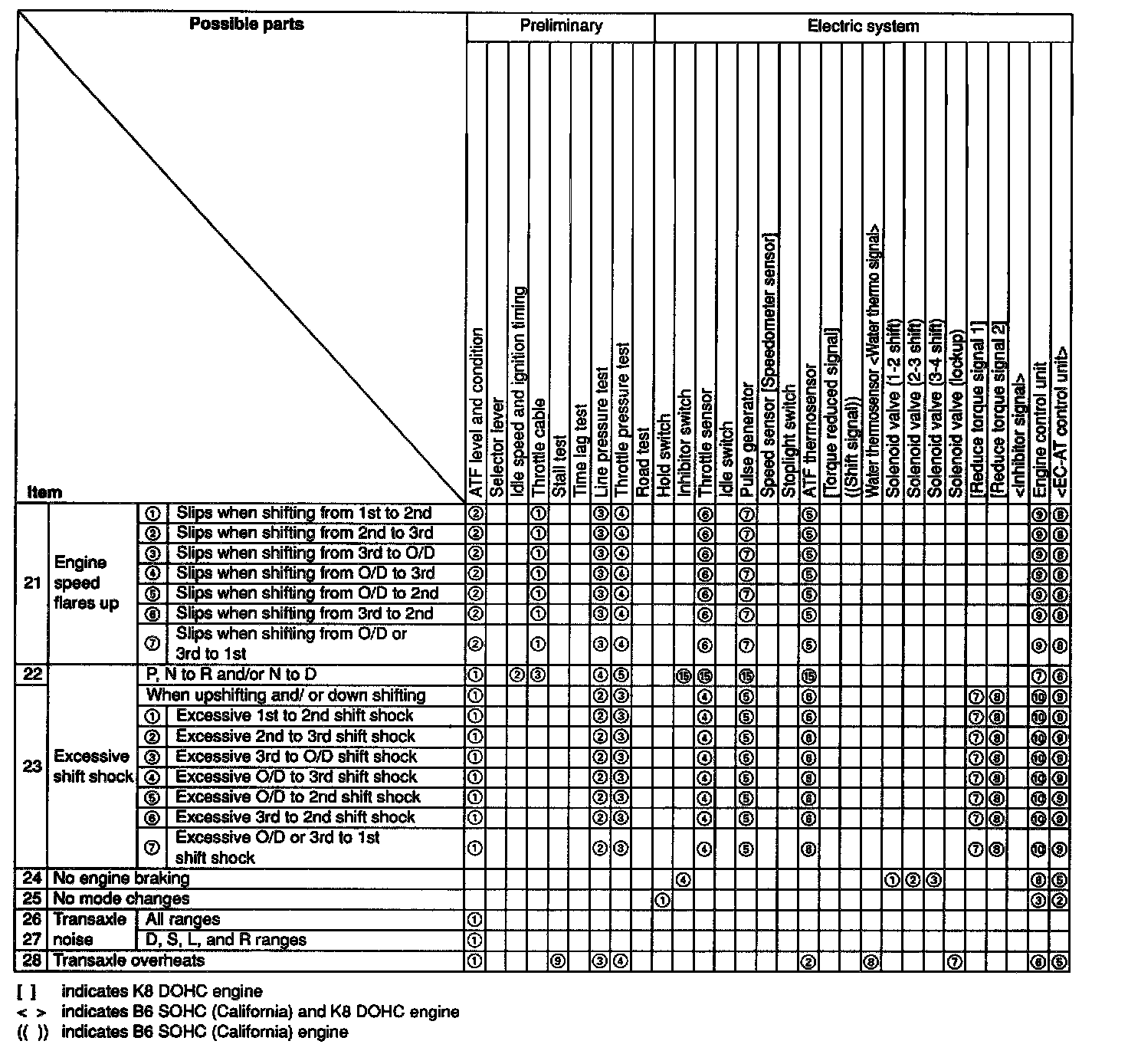
Quick Diagnosis Chart (II-2) Part 2:
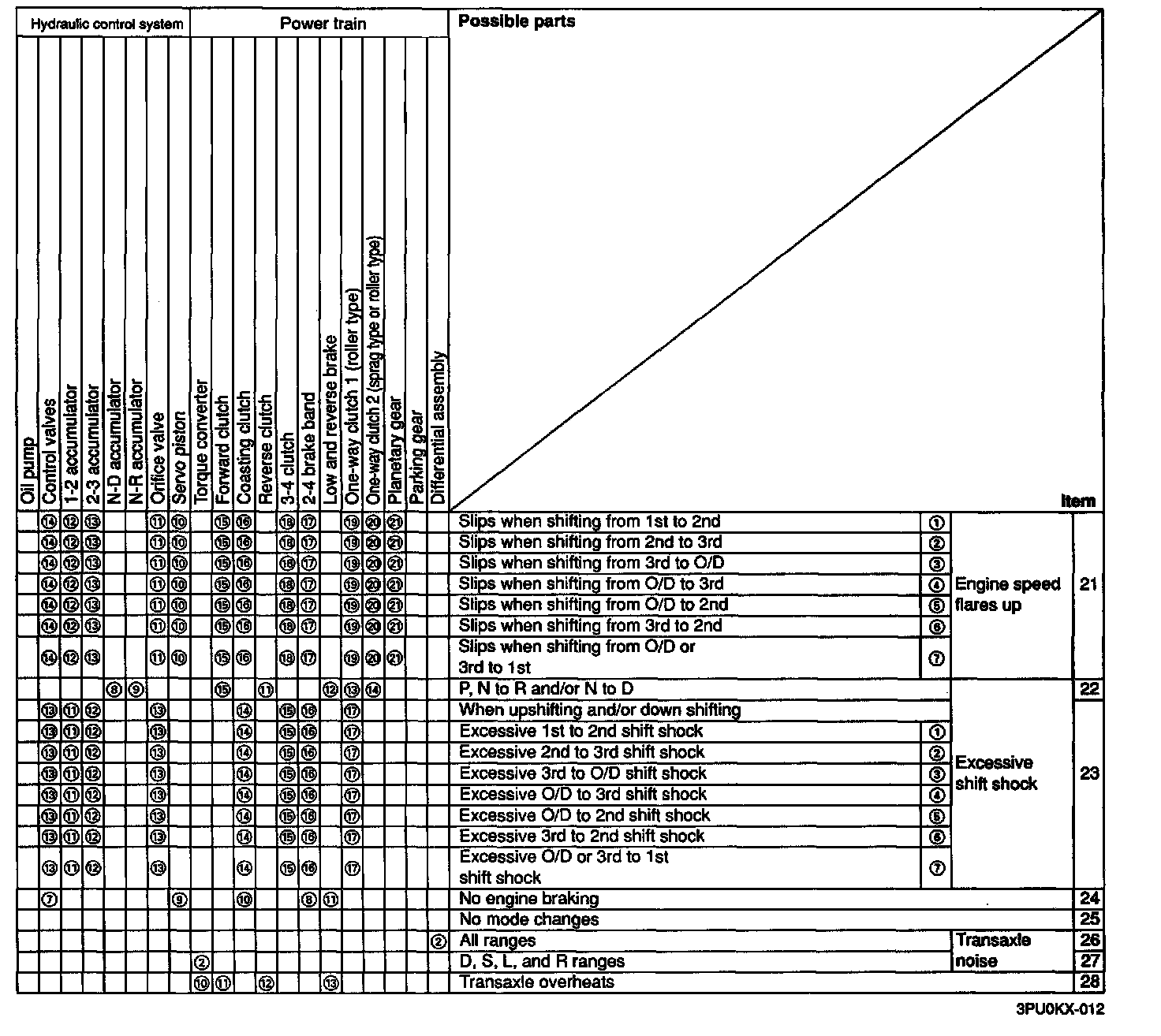
The Quick Diagnosis Chart shows various problems and the relationship of various components that might be the cause of the problem.
1. Components indicated in the "Self-Diag." line are diagnosed by the engine control unit self-diagnosis function.
The SST (EC-AT Tester, Self-Diagnosis Checker or DT-S1000) can be used for easy retrieval of the service code numbers.
2. Components indicated in the "Adjustment" line indicate that there is a possibility that the problem may be the result of an incorrect adjustment.
Check the adjustment of each component, and readjust if necessary.
3. Input and output signals of the engine control unit for the components indicated in the "EC-AT TESTER" line can be easily checked by using the SST (EC-AT Tester).
4. Components indicated in the "Stall Test" line can be checked for malfunction by the results of the stall test.
5. Components indicated in the "Time Lag Test" line can be checked for malfunction by the results of the time lag test.
6. Components indicated in the "Oil Pressure Test" line can be checked for malfunction by the results of the oil pressure test.
7. Components indicated in the "Road Test" line can be checked for malfunction by the results of the road test.
8. Check, adjust, repair, or replace components as required.