P0108
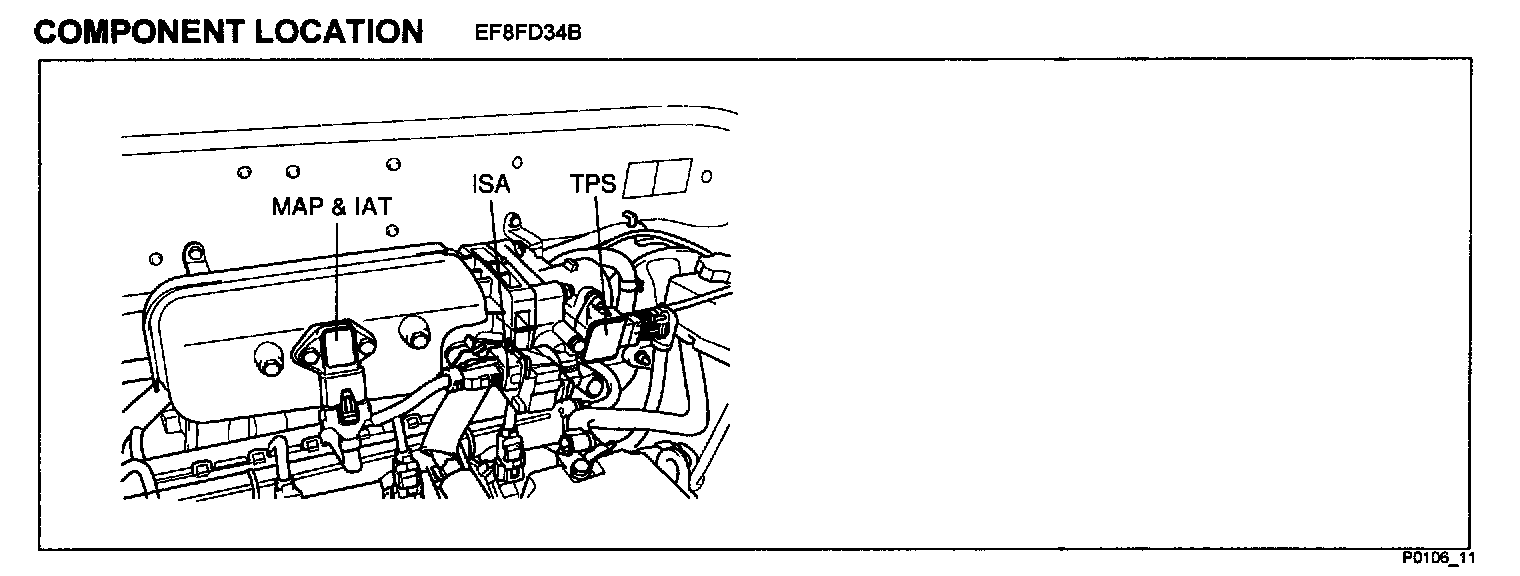
DTC P0108 MAP SENSOR RANGE CHECK HIGHComponent Location:
GENERAL DESCRIPTION
The Manifold Absolute Pressure(MAP) sensor measures the change of pressure in the intake manifold. The pressure of intake manifold is changed as variable engine running condition and converted into voltage and then it is monitored by the PCM.
DTC DESCRIPTION
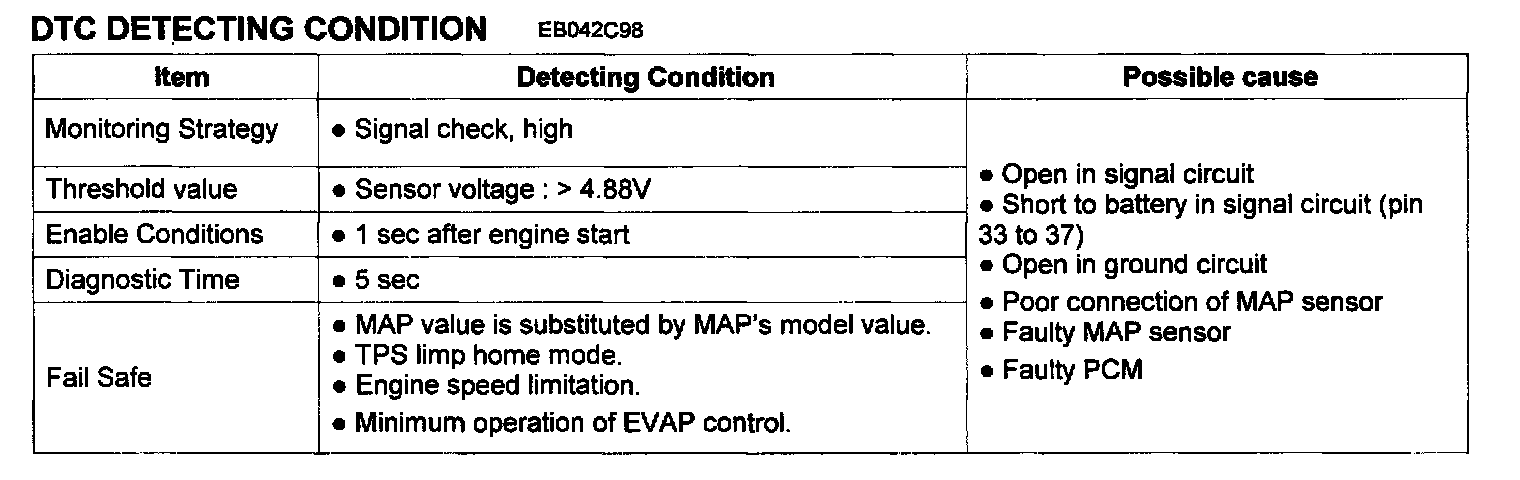
PCM sets DTC P0108 if the ECM detects signal voltage higher than the possible range of a properly operating MAP sensor.
DTC Detecting Condition:
Specification:

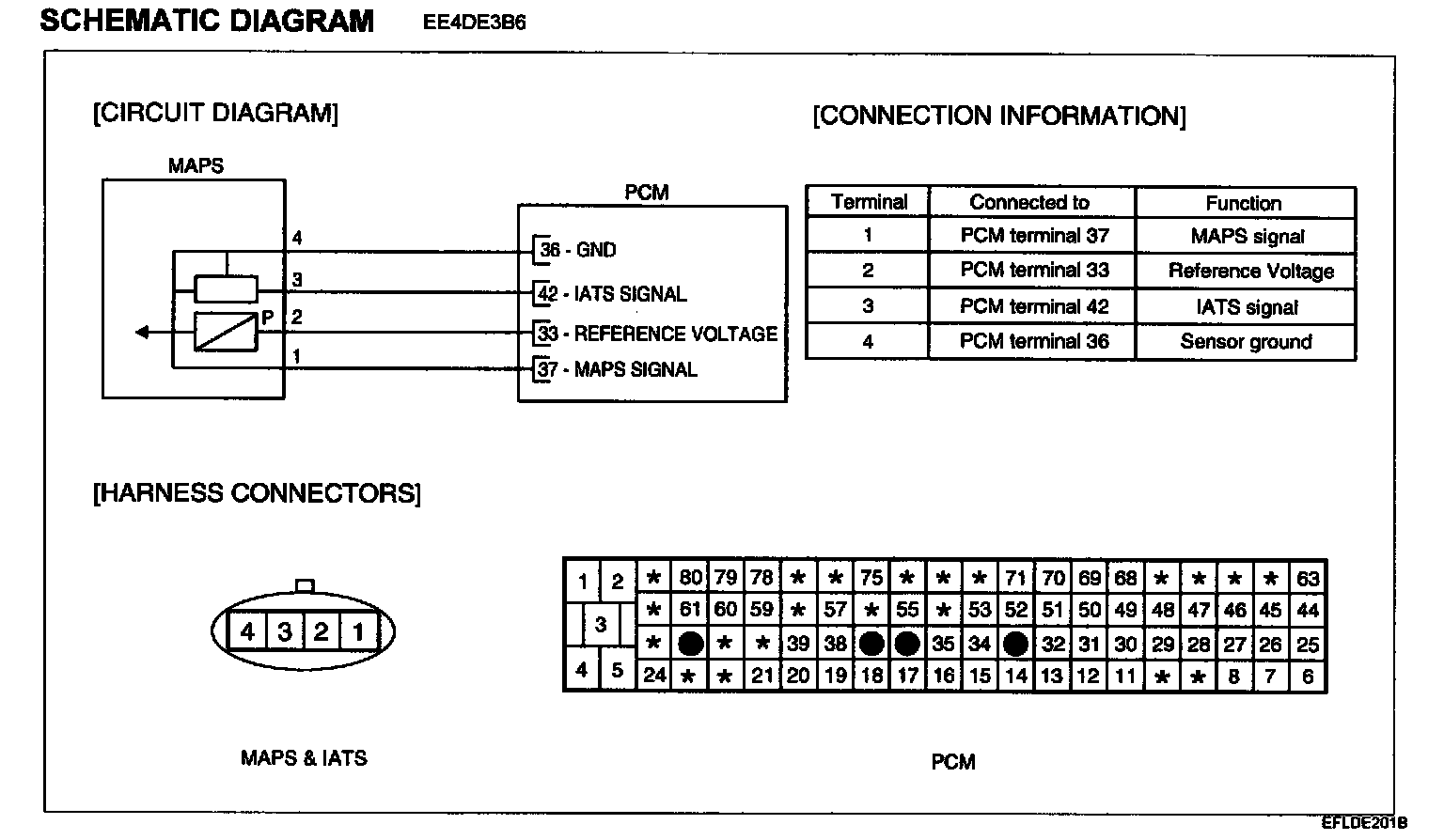
Schematic Diagram:
SCHEMATIC DIAGRAM
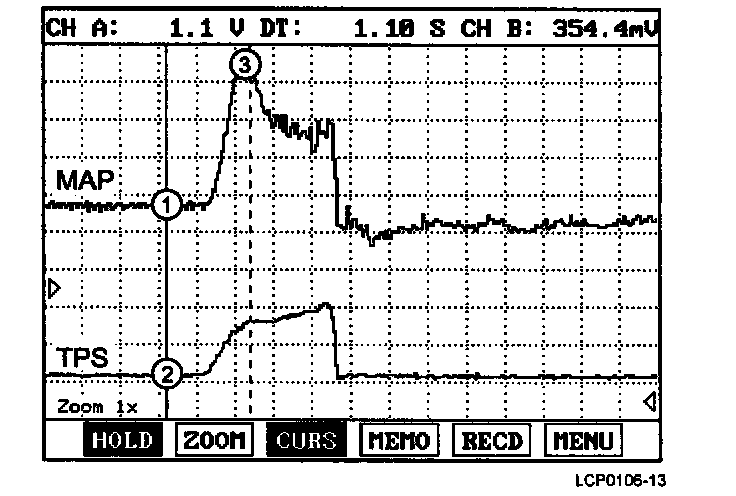
SIGNAL WAVEFORM & DATA
when checking TPS wave form,it is strongly recommended to examine wave form with MAP sensor wave form.
1. Period (1) is the voltage of MAP in idling and 0.8 - 1.2 V and there must be a little fluctuation in wave form.
2. The voltage in Period (2) is 0.3 - 1.0 V in average.
3. Period (3.) is in W.O.T and the voltage there is 4.3 V,and MAP sensor voltage is about 4.3 V.
MONITOR DTC STATUS
This is the inspection procedure to determine whether it is present DTC or memoried one by monitoring the current signal or by using the function of oscilloscope with Hi-scan pro.
1. Connect scantool to Data Link Connector(DLC).
2. Warm up the engine to normal operating temperature.
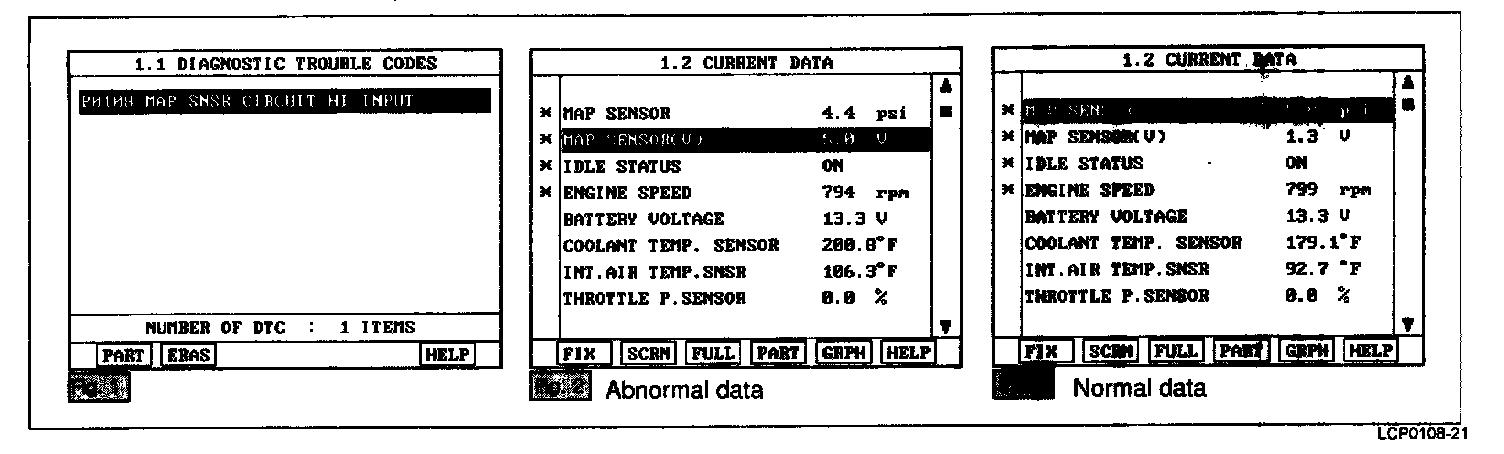
3. Monitor the "MAP sensor" parameter on the scantool.
NOTE: The data shown above is only for reference and there may be a little difference actually.
It is normal that the output of MAP sensor changes in accordance with TPS angle.
4. Is parameter displayed within specifications?
YES:
- Fault is intermittent caused by poor contact in the sensor's and/or PCM's connector or was repaired and PCM memory was not cleared.
- Thoroughly check connectors for looseness, poor connection, bending, corrosion,contamination ,deterioration, or damage Repair or replace as necessary and then go to "Verification of Vehicle Repair" procedure.
NO: Go to "W/Harness Inspection" procedure
TERMINAL & CONNECTOR INSPECTION
1. Many malfunctions in the electrical system are caused by poor harness and terminals. Faults can also be caused by interference from other electrical systems, and mechanical or chemical damage.
2. Thoroughly check connectors for looseness, poor connection, bending, corrosion, contamination,deterioration, or damage.
3. Has a problem been found?
YES: Repair as necessary and go to "Verification of vehicle Repair" procedure.
NO: Go to "Signal circuit inspection" procedure.
SIGNAL CIRCUIT INSPECTION
Checking the circuit of MAP signal line is to find whether there is open or short circuit in MAP harness.
1. Check for open in harness
1. Ignition "OFF"
2. Disconnect MAP sensor connector.
3. Ignition "ON" & Engine "OFF"
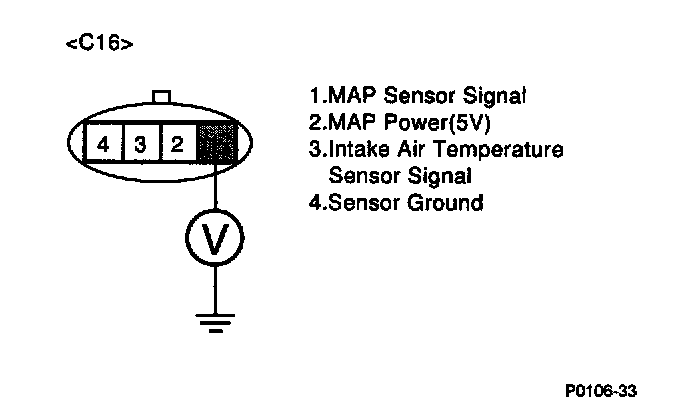
4. Measure voltage between terminal 1 of sensor harness connector and chassis ground.
Specification : approximately 5 V
5. Is measure voltage within Specification?
YES: Go to "Check for short to power in harness" as below.
NO:
- Open circuit or short circuit to chassis ground between MAP harness connector and signal circuit.
- Open circuit between MAP hamess connector and ECM harness connector.
- Repair as necessary and then go to "Verification of Vehicle Repair" procedure
NOTE: In case,when MAP connector is disconnected,the voltage of MAP terminal 1 is 0 V.
- Possible cause: Open or short between terminal 16 of PCM and Terminal 1 of MAP
2. Check for short to power in harness
1. Ignition "OFF"
2. Disconnect MAP sensor connector and ECM connector.
3. Ignition "ON" & Engine "OFF"
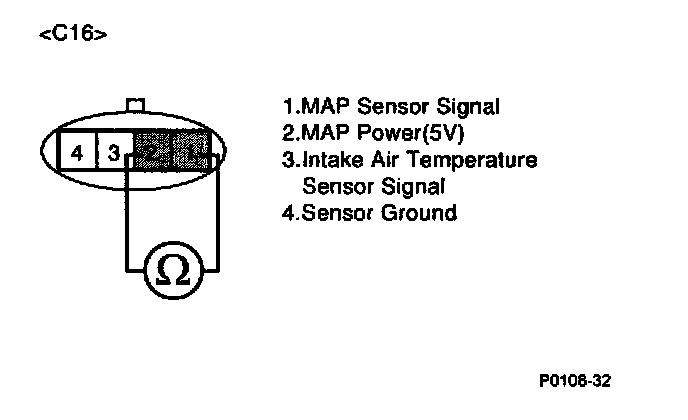
4. Measure resistance between terminal 1 and 2 of sensor harness connector.
Specification: infinite
5. Is measure resistance within Specification?
YES: Go to "Ground Circuit Inspection" procedure.
NO:
- Short circuit between reference voltage(5 V) circuit and signal circuit.
- Repair as necessary and then go to "Verification of Vehicle Repair" procedure
NOTE: when the terminal 1 and 2 of MAP is shorted, the resistence is below 1 Ohm.
GROUND CIRCUIT INSPECTION
Checking the circuit of MAP ground line is to find whether there is open or short circuit in MAP harness.
1. Ignition "OFF"
2. Disconnect MAP sensor connector.
3. Ignition "ON" & Engine "OFF"
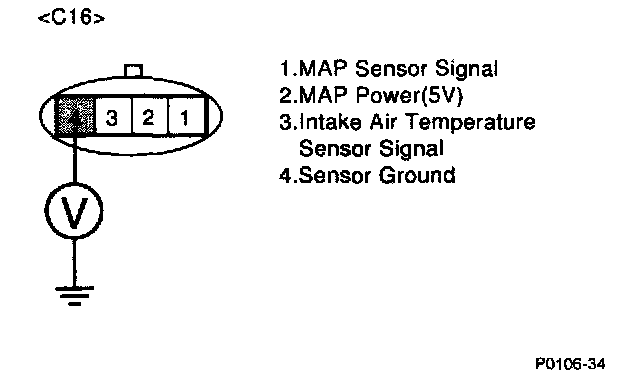
4. Measure voltage or resistance between terminal 4 of sensor harness connector and chassis ground.
Specification : below 0.5 V or below 1 Ohms
5. Is measure voltage or resistance within Specification?
YES: Go to "Component Inspection" procedure.
NO:
- Open circuit between MAP harness connector and ECM harness connector.
- Repair as necessary and then go to "Verification of Vehicle Repair" procedure
NOTE: In case, when MAP connector is disconnected, the resistance of MAP terminal 4 is infinite.
- Possible cause: Open or short between terminal 36 of PCM and Terminal 4 of MAP
COMPONENT INSPECTION
1. Check PCM
The purpose of checking PCM is to determine whether there is any malfunction of PCM.
1. Ignition "OFF"
2. Connect Scantool and Engine "ON"
3. Select simulation function on scantool.
4. Simulate voltage at terminal 1 of MAP sensor signal connector.
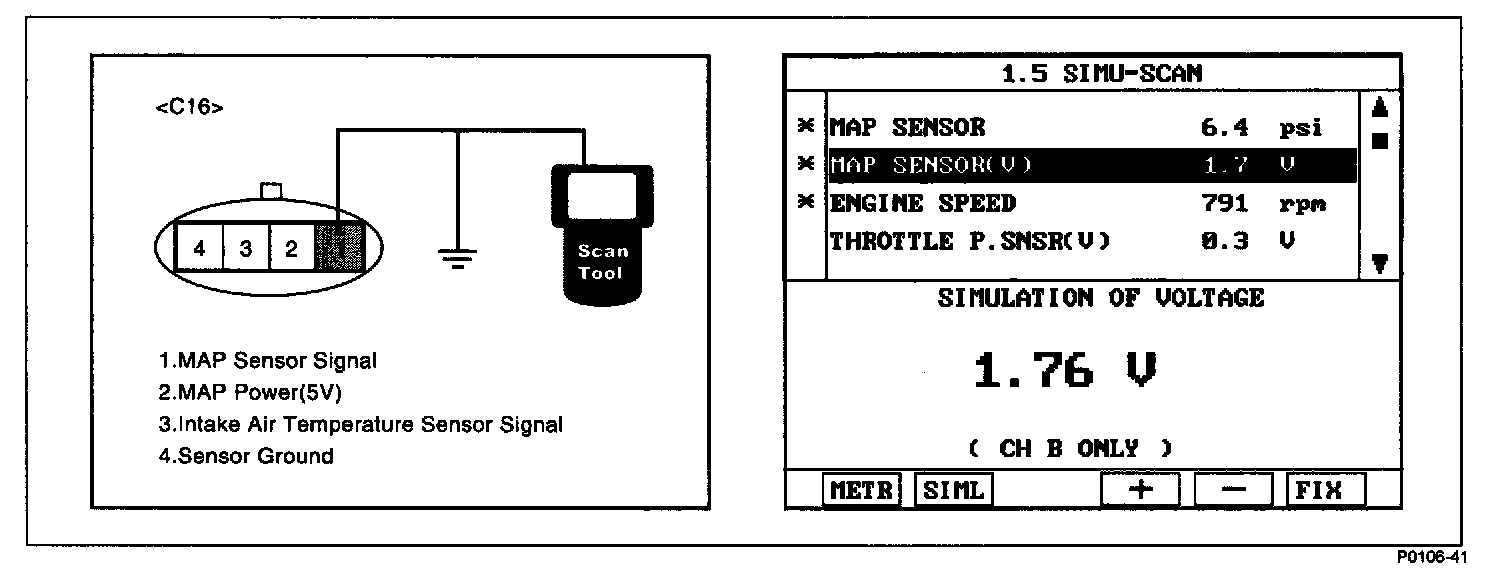
5. Verify MAP voltage to change while raising or lowering simulation voltage with scan tool within 0.5 - 3.5 V
Specification : If the data is changeable as simulation voltage changes, it's OK
6. Is MAP sensor signal value changed according to simulation voltage?
YES: Check MAPS for contamination, deterioration, or damage. Clean MAPS with suitable cleaner as necessary and let air dry before reinstalling. If problem still exists, Substitute with a known-good MAPS and check for proper operation.
If the problem is corrected, replace MAPS and then go to "Verification of vehicle Repair" procedure.
NO: Substitute with a known-good PCM and check for proper operation. If the problem is corrected, replace PCM and then go to "Verification of Vehicle Repair" procedure.
VERIFICATION OF VEHICLE REPAIR
After a repair, it is essential to verify that the fault has been corrected.
1. Monitor and record the Freeze Frame Data for the Diagnostic Trouble Code (DTC) which has been diagnosed
2. Using a Scantool, Clear the DTCs.
3. Operate the vehicle within conditions noted in the freeze frame data or enable conditions
4. Monitor that all rediness test have been verified as "Complete"
5. Are any DTCs present?
YES: Go to the applicable troubleshooting procedure.
NO: System is performing to specification at this time.